
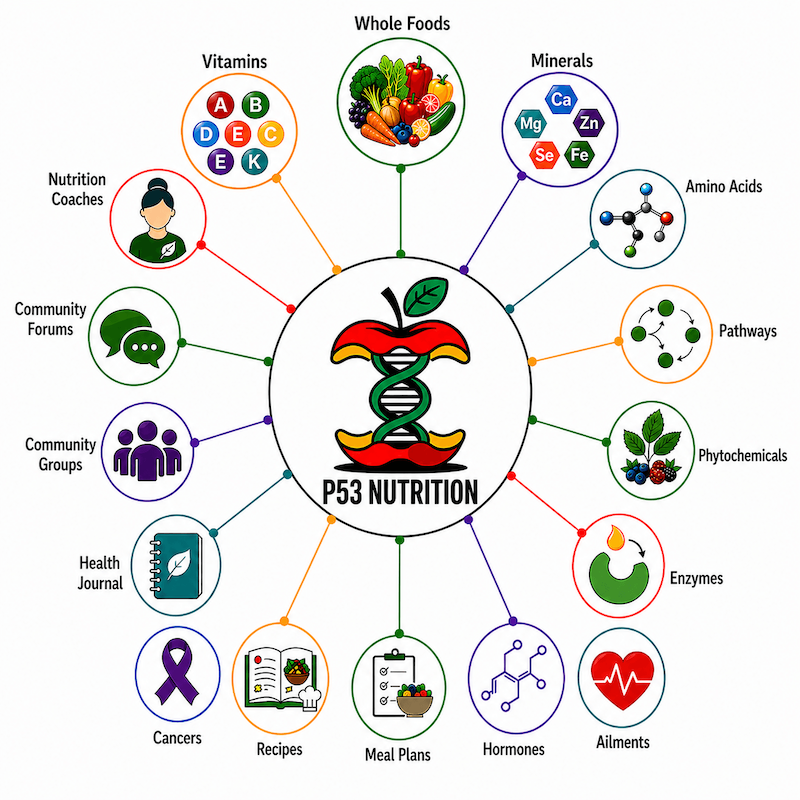
This is not just a collection of foods. It is a structured, relational system designed to connect plant-based nutrition to the deeper biological systems of the human body. This is what powers the P53 Nutritional Pathway System™.
Most plant-based databases store foods as isolated entries. You search for a fruit, view nutrients, and move on. P53 Nutrition is built differently. Every food, nutrient, and biological element is connected in a relational structure that allows the system to understand how nutrition actually works.
Instead of asking “what nutrients are in this food,” the system can explore deeper relationships such as how foods connect to pathways, how nutrients interact with biological systems, and how groups of foods can be aligned toward specific nutritional goals.
Fruits, vegetables, legumes, nuts, seeds, whole grains, mushrooms, herbs, and spices are all structured as core entities within the system.
Foods are not just listed—they are mapped into meaningful roles based on how they relate to nutrition, conditions, and biological processes.

P53 Nutrition extends beyond food composition and into the biological systems that give nutrition meaning. This includes structured data relationships across:
Vitamins, minerals, amino acids, and phytochemicals are connected to foods and to each other, forming a complete nutritional profile system.
Enzymes, hormones, and pathways are integrated into the database, allowing nutrition to be understood in the context of real biological function.
What makes P53 Nutrition truly one of a kind is not just the data—it is how the data is structured, connected, and used. The system allows for intelligent mapping between foods, nutrients, and biological processes, enabling more advanced insights than traditional nutrition tools.
This is why P53 Nutrition is not just a database. It is a Nutritional Pathway System™ designed to support better decisions, deeper understanding, and more meaningful connections between food and health.

