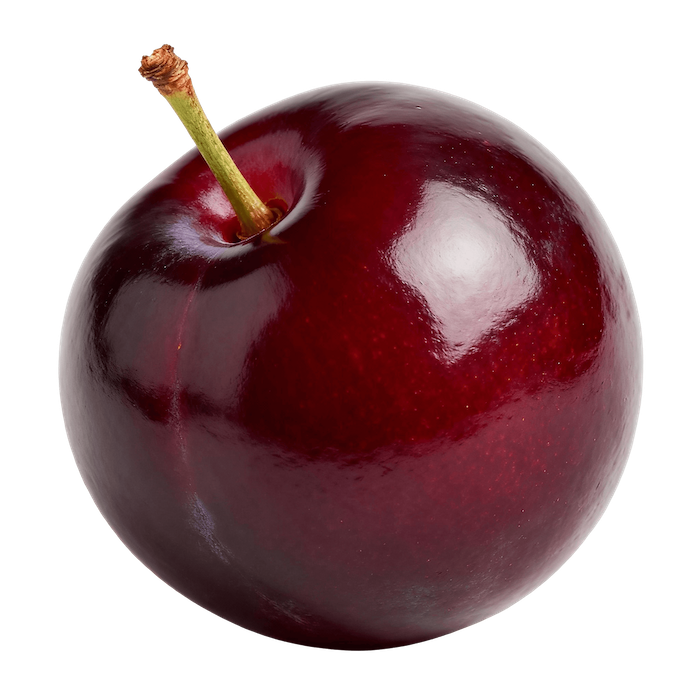
Chokecherry (raw, pitted)

Chokecherry (raw, pitted)

FamilyRosaceae
Importance
Chokecherry is a dark red to purple-black fruit from Prunus virginiana, a North American wild cherry valued for its tart flavor, deep pigments, fiber, vitamin C, minerals, and concentrated polyphenols. The fruit is naturally astringent because it contains tannins and phenolic compounds, and it is commonly used in cooked fruit preparations, syrups, sauces, jams, juices, and traditional foods. Per 100 g, raw pitted chokecherry provides meaningful carbohydrate, fiber, protein, potassium, calcium, magnesium, vitamin C, and plant compounds within a whole-fruit matrix.

Chokecherry is especially notable for anthocyanins and phenolic acids. Its dark color reflects pigments such as cyanidin-based anthocyanins, while its sharp flavor comes from organic acids and tannin-like compounds. These compounds are part of the broader Prunus fruit chemistry also found in cherries, plums, and other stone fruits. Chokecherry polyphenols have been studied for antioxidant capacity, inflammatory signaling balance, and cellular defense activity. The fruit also contains proanthocyanidins, flavonols, chlorogenic acid-related compounds, quercetin derivatives, catechins, and other phenolic constituents.

For cancer and ailment-support nutrition, chokecherry is relevant because its anthocyanins, phenolic acids, vitamin C, fiber, and minerals connect to protective biological pathways. These include Nrf2-related antioxidant response, NF-kB inflammatory signaling balance, AMPK-linked metabolic regulation, insulin-related carbohydrate handling, endothelial nitric oxide activity, apoptosis-related cell signaling, and gut fermentation pathways supported by fiber. Chokecherry does not act as a standalone disease solution, but its whole-fruit chemistry contributes antioxidant nutrients, digestive fiber, and polyphenols that support cellular resilience, vascular balance, and normal metabolic function.

Chokecherry has a strong regional food identity in North America, especially among Indigenous food traditions and northern prairie communities. Because the raw fruit can be very tart and astringent, it is often cooked or combined with sweeter fruits such as apple, pear, plum, blueberry, or grape. The pit is not eaten.

Chokecherry’s strongest nutritional identity is its combination of dark Prunus pigments, tannins, phenolic acids, fiber, vitamin C, and wild-fruit mineral content. It contributes color-rich plant diversity, tart flavor, and polyphenol density in a small fruit. Its value is strongest in whole-food patterns that emphasize berries, stone fruits, fiber, antioxidant support, and plant compounds tied to inflammatory, vascular, digestive, and cellular repair pathways.

Region FoundChokecherry Prunus virginiana is native across much of North America, including Canada, the northern and western United States, the Great Plains, the Rocky Mountain region, woodland edges, ravines, slopes, thickets, open fields, riverbanks, and prairie margins. It grows as a shrub or small tree and often forms dense thickets in wild habitats.
Helps Fight These Cancers: Oral Cavity Pharynx Larynx Cancer, Colon Cancer, Gastric Cancer
Helps Fight These Ailments: Constipation, Antioxidant Defense, Metabolic Health
Linked Hormones:

All values per 100g
Nutrition Facts
Calories (kcal)162
Protein (g)3.05
Carbohydrates (g)33.6
Fiber (g)20
Sugars (g)9.35
Total Fat (g)1.69
Saturated Fat (g)0
Vitamins
Vitamin A (µg RAE)8
Vitamin C (mg)5.5
Vitamin D (µg)0
Vitamin E (mg)0.35
Vitamin K (µg)21.1
Vitamin B1 / Thiamin (mg)0.033
Vitamin B2 / Riboflavin (mg)0.175
Vitamin B3 / Niacin (mg)0.63
Vitamin B5 / Pantothenic Acid (mg)0.396
Vitamin B6 (mg)0.195
Vitamin B7 / Biotin (µg)0
Folate B9 (µg)2
Vitamin B12 (µg)0
Vitamin Detail Pages
Minerals
Calcium (mg)60
Iron (mg)0.71
Magnesium (mg)27
Phosphorus (mg)67
Potassium (mg)379
Sodium (mg)5
Zinc (mg)0.33
Copper (mg)0.19
Manganese (mg)0.42
Selenium (µg)0
Iodine (µg)0
Mineral Detail Pages
Amino Acids
Alanine (mg)0 mg
Arginine (mg)0 mg
Asparagine (mg)0 mg
Aspartic Acid (mg)0 mg
Cysteine (mg)0 mg
Glutamic Acid (mg)0 mg
Glutamine (mg)0 mg
Glycine (mg)0 mg
Histidine (mg)0 mg
Isoleucine (mg)0 mg
Leucine (mg)0 mg
Lysine (mg)0 mg
Methionine (mg)0 mg
Phenylalanine (mg)0 mg
Proline (mg)0 mg
Serine (mg)0 mg
Threonine (mg)0 mg
Tryptophan (mg)0 mg
Tyrosine (mg)0 mg
Valine (mg)0 mg
Amino Acid Detail Pages
Phytochemicals
Anthocyanins, cyanidin-based pigments, proanthocyanidins, tannins, flavonols, quercetin derivatives, catechins, chlorogenic acid-related compounds, phenolic acids, organic acids, vitamin C, fiber, potassium, calcium, magnesium, and Prunus-family polyphenols. Research references: Tellez-Perez C, et al. Antioxidant Content of Frozen, Convective Air-Dried, Freeze-Dried and Swell-Dried Chokecherries Prunus virginiana L. Molecules. 2020. Green RC. Physicochemical composition of buffaloberry Shepherdia argentea, chokecherry Prunus virginiana and sea buckthorn Hippophae rhamnoides fruit harvested in Saskatchewan, Canada. University of Saskatchewan. 2007. Li W. The potential of Manitoba chokecherry as a source of high-value natural antioxidants. Nature Precedings. 2008.
Research & Notes
Research Notes:
USDA FDC (American Indian/Alaska Native dataset) via MyFoodData; 154 g serving converted to per 100 g.
Notes:
Raw chokecherries, pitted; per 100 g.
Created: 2025-10-21 13:41:24
Last Updated: 2026-06-04 08:05:23