Importance
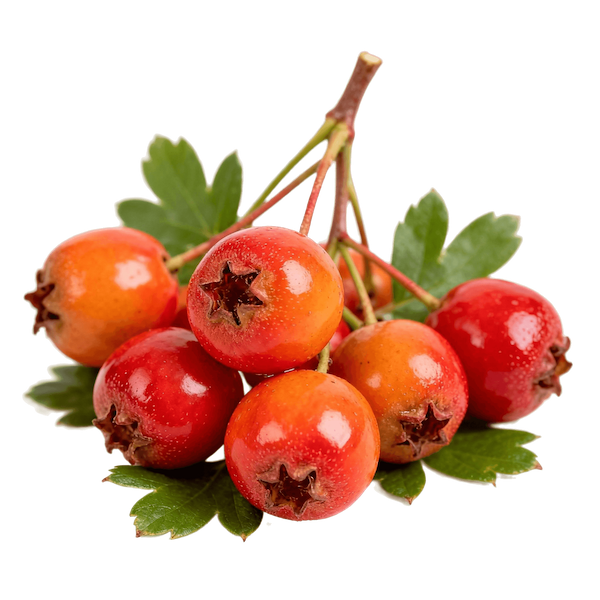
Hawthorn berry is the small red fruit of Crataegus species, valued for its tart flavor, pectin-rich flesh, vitamin C, minerals, organic acids, and concentrated polyphenol profile. The fruit is commonly used in cooked preparations, sauces, teas, jams, fruit leathers, syrups, and traditional foods. Its flavor is usually tart, mildly sweet, and astringent because the fruit contains tannins, procyanidins, flavonoids, and phenolic acids. Hawthorn berries are part of the rose family and share some fruit chemistry with apples, pears, quince, and other pome fruits.
Hawthorn berry supports everyday nourishment through fiber, pectin, potassium, calcium, magnesium, iron, vitamin C, and polyphenols. Pectin and other fibers support digestive movement, stool bulk, and gut microbial fermentation. Vitamin C contributes to collagen formation, antioxidant recycling, immune barrier function, and connective tissue maintenance. Potassium and magnesium support fluid balance, nerve signaling, muscle contraction, and ATP-related energy metabolism. Calcium supports bone mineral structure and cell signaling.
For cancer and ailment-support nutrition, hawthorn berry is relevant because Crataegus fruits contain procyanidins, epicatechin, hyperoside, vitexin derivatives, chlorogenic acid, isoquercetin, quercetin derivatives, anthocyanins, triterpenic acids, and other phenolic compounds. These compounds connect to Nrf2-related antioxidant response, NF-kB inflammatory signaling balance, AMPK-linked metabolic regulation, insulin-related carbohydrate handling, endothelial nitric oxide activity, mitochondrial energy pathways, apoptosis-related cell signaling, and gut fermentation pathways supported by pectin. Hawthorn berry does not act as a standalone disease solution, but the whole fruit contributes fiber, minerals, and polyphenols tied to vascular support, cellular redox balance, inflammatory signaling balance, digestive function, and normal metabolic regulation.
Hawthorn berries pair well with apples, pears, rosehips, cranberries, cherries, citrus, cinnamon, ginger, oats, walnuts, almonds, and whole grains. The seeds are not eaten. Hawthorn berry’s strongest nutritional identity is the combination of tart pome-fruit acidity, pectin, procyanidins, flavonoids, chlorogenic acid, minerals, and Crataegus-family polyphenols connected to antioxidant, vascular, inflammatory, digestive, metabolic, and cellular repair pathways.