Melon Pear (Pepino Melon)

Melon Pear (Pepino Melon)

FamilySolanaceae
Importance
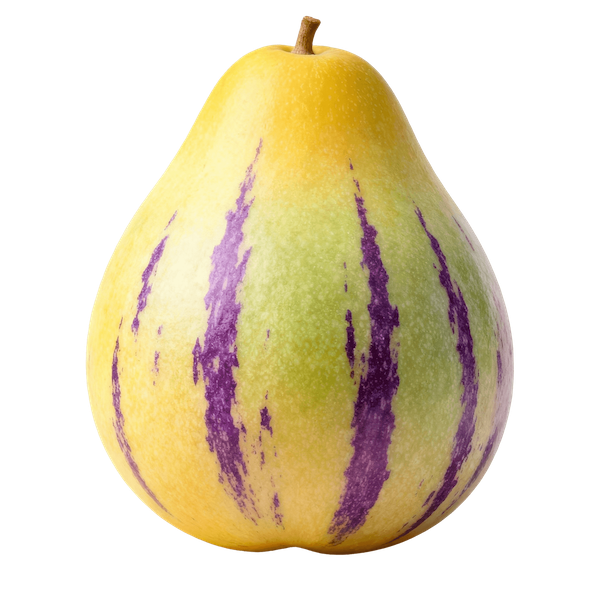
Melon pear, commonly called pepino melon, is the fruit of Solanum muricatum, a South American nightshade-family fruit valued for its mild melon-like flavor, juicy flesh, vitamin C, potassium, fiber, carotenoids, phenolic compounds, and low-calorie profile. The fruit is usually cream to yellow with purple streaking when ripe, and the flesh is soft, fragrant, and refreshing. Its flavor is often described as a blend of melon, cucumber, pear, and mild tropical fruit. Per 100 g, melon pear is mostly water with natural carbohydrate, small amounts of fiber, very little fat, modest protein, vitamin C, potassium, and smaller amounts of B vitamins and minerals.

Melon pear supports everyday nourishment through hydration, vitamin C, potassium, fiber, and antioxidant-active plant compounds. Vitamin C contributes to collagen formation, antioxidant recycling, immune barrier function, and connective tissue maintenance. Potassium supports fluid balance, nerve signaling, and muscle contraction. Fiber supports digestive movement and microbial fermentation. Its gentle sweetness and high water content make it useful in fresh fruit bowls, smoothies, chilled salads, and light whole-food preparations.

For cancer and ailment-support nutrition, melon pear is relevant because Solanum muricatum contains vitamin C, quercetin-related compounds, polyphenols, carotenoids, flavonoids, alkaloid-related compounds, tannins, and antioxidant-active metabolites. These compounds connect to Nrf2-related antioxidant response, NF-kB inflammatory signaling balance, AMPK-linked metabolic regulation, insulin-related carbohydrate handling, endothelial function, phase II detoxification enzyme signaling, apoptosis-related cell signaling, and gut fermentation pathways supported by fiber. Melon pear does not act as a standalone disease solution, but the whole fruit contributes hydration, antioxidant nutrients, minerals, and plant compounds tied to cellular repair, inflammatory signaling balance, vascular support, digestive function, and normal metabolic regulation.

Melon pear pairs well with citrus, berries, cucumber, mint, mango, pineapple, banana, leafy greens, oats, ginger, and whole grains. Its strongest nutritional identity is the combination of water-rich flesh, vitamin C, potassium, low sugar density, mild Solanum-family aroma, carotenoids, and phenolic compounds connected to antioxidant, digestive, vascular, metabolic, inflammatory, and cellular defense pathways.

Region FoundMelon pear Solanum muricatum is native to the Andean regions of South America, especially Peru, Ecuador, Colombia, Bolivia, and Chile. It is now cultivated in New Zealand, Australia, China, Turkey, Spain, Israel, Japan, parts of the United States, and other mild subtropical or frost-protected regions with well-drained soils and moderate temperatures.
Helps Fight These Cancers: Colon Cancer, Gastric Cancer
Helps Fight These Ailments: Antioxidant Defense, Metabolic Health, Skin Health
Linked Hormones:

All values per 100g
Nutrition Facts
Calories (kcal)26
Protein (g)0.5
Carbohydrates (g)6.2
Fiber (g)1.1
Sugars (g)5.2
Total Fat (g)0.1
Saturated Fat (g)0
Vitamins
Vitamin A (µg RAE)15
Vitamin C (mg)25
Vitamin D (µg)0
Vitamin E (mg)0.1
Vitamin K (µg)0
Vitamin B1 / Thiamin (mg)0.02
Vitamin B2 / Riboflavin (mg)0.04
Vitamin B3 / Niacin (mg)0.4
Vitamin B5 / Pantothenic Acid (mg)0
Vitamin B6 (mg)0.05
Vitamin B7 / Biotin (µg)0
Folate B9 (µg)6
Vitamin B12 (µg)0
Vitamin Detail Pages
Minerals
Calcium (mg)15
Iron (mg)0.3
Magnesium (mg)10
Phosphorus (mg)18
Potassium (mg)210
Sodium (mg)1
Zinc (mg)0.1
Copper (mg)0.05
Manganese (mg)0.07
Selenium (µg)0
Iodine (µg)0
Mineral Detail Pages
Amino Acids
Alanine (mg)0 mg
Arginine (mg)0 mg
Asparagine (mg)0 mg
Aspartic Acid (mg)0 mg
Cysteine (mg)0 mg
Glutamic Acid (mg)0 mg
Glutamine (mg)0 mg
Glycine (mg)0 mg
Histidine (mg)0 mg
Isoleucine (mg)0 mg
Leucine (mg)0 mg
Lysine (mg)0 mg
Methionine (mg)0 mg
Phenylalanine (mg)0 mg
Proline (mg)0 mg
Serine (mg)0 mg
Threonine (mg)0 mg
Tryptophan (mg)0 mg
Tyrosine (mg)0 mg
Valine (mg)0 mg
Amino Acid Detail Pages
Phytochemicals
Vitamin C, quercetin-related compounds, polyphenols, phenolic acids, flavonoids, carotenoids, beta-carotene-related compounds, alkaloid-related compounds, tannins, antioxidant-active metabolites, organic acids, potassium, thiamine, niacin, riboflavin, calcium, phosphorus, iron, and Solanum muricatum bioactive compounds. Research references: Chan HTL, Chan KM, Abhreet-Kaur, Sam SW, Chan SW. A Review of the Pharmacological Effects of Solanum muricatum Fruit Pepino Melon. Foods. 2024. Sun Z, et al. Pepino Solanum muricatum Metabolic Profiles and Soil Microbiome in Different Geographical Origins. Metabolites. 2022. Prohens J, Ruiz JJ, Nuez F. The pepino Solanum muricatum, a new crop with a history. Economic Botany. 1996.
Research & Notes
Research Notes:
FAO Latin American Food Composition Table per 100 g fresh fruit.
Notes:
Raw melon pear (Solanum muricatum) edible portion; per 100 g.
Created: 2025-10-21 13:48:27
Last Updated: 2026-06-04 08:05:23