Importance
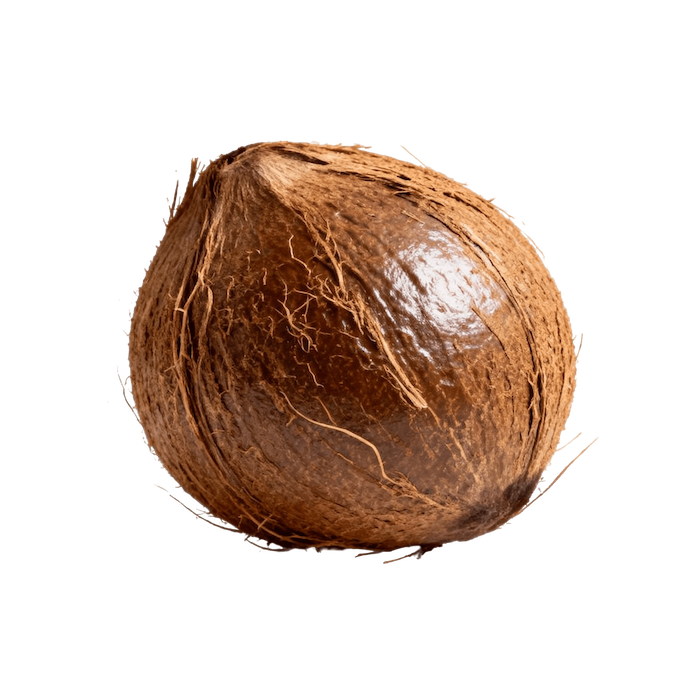
Raw coconut is the white edible kernel of Cocos nucifera, a tropical palm fruit valued for its firm texture, distinctive flavor, fiber, manganese, copper, selenium, potassium, iron, and medium-chain saturated fatty acids. Unlike most fruits, raw coconut meat is energy-dense and fat-rich. Per 100 g, raw coconut meat provides about 354 calories, 33.5 g fat, 15.2 g carbohydrate, 9.0 g fiber, and 3.3 g protein. Its carbohydrate is carried with substantial fiber, while its fat fraction contains lauric acid, myristic acid, caprylic acid, capric acid, palmitic acid, and oleic acid.
Raw coconut supports nourishment through fiber, minerals, and lipid-based energy. Fiber supports normal digestive movement and gut fermentation. Manganese participates in connective tissue formation, antioxidant enzyme function, and carbohydrate metabolism. Copper supports iron handling and normal connective tissue enzyme activity. Selenium contributes to selenoprotein systems, while potassium supports fluid balance, nerve signaling, and muscle contraction. Coconut protein is modest in amount but includes measurable arginine, glutamic acid, aspartic acid, leucine, valine, alanine, glycine, serine, and other amino acids.
For cancer and ailment-support nutrition, raw coconut is relevant because its fiber, phenolic compounds, minerals, and fatty acid profile connect to several biological pathways. These include gut fermentation and short-chain fatty acid production from fiber, Nrf2-related antioxidant response, NF-kB inflammatory signaling balance, AMPK-linked energy regulation, insulin-related metabolic signaling, lipid digestion and beta-oxidation pathways, bile-acid handling, and mineral-supported antioxidant enzyme systems. Coconut does not act as a standalone disease solution, but its whole kernel supplies fiber, minerals, amino acids, and phytochemicals that contribute to digestive function, cellular redox balance, tissue structure, and energy metabolism.
Raw coconut phytochemicals include phenolic acids, flavonoids, tannins, alkaloid-associated compounds, phytosterols, tocopherols, tocotrienols, and lignan-related compounds, with higher concentrations often found in the brown testa than in the white kernel alone. Coconut meat also contains aromatic compounds that contribute to its sweet, nutty flavor. The firm kernel can be eaten fresh, grated, blended, or used in fruit bowls, sauces, chutneys, and whole-food preparations.
Raw coconut’s strongest nutritional identity is its combination of high fiber, mineral density, medium-chain fatty acids, and tropical palm-fruit chemistry. It is more concentrated than watery fruits and is best understood as a rich whole fruit kernel that provides texture, satiety, minerals, lipid energy, and plant compounds tied to digestive, antioxidant, inflammatory, and metabolic pathways.