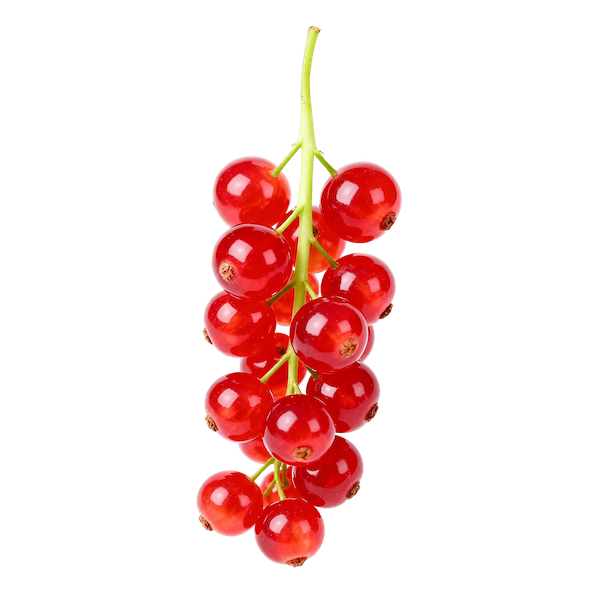
Red currant

Red currant

FamilyGrossulariaceae
Importance
Red currant is the small translucent red berry of Ribes rubrum and related Ribes species, valued for its tart flavor, vitamin C, fiber, potassium, manganese, organic acids, and bright red berry polyphenols. The fruit grows in hanging clusters and is commonly used fresh, cooked into sauces, added to fruit bowls, made into jams, used in compotes, or blended into tart juices. Per 100 g, raw red currant provides about 56 calories, 13.8 g carbohydrate, 4.3 g fiber, 1.4 g protein, and very little fat. Its natural sugars are balanced by strong acidity, pectin-rich fiber, small edible seeds, minerals, and phytochemicals.

Red currant supports everyday nourishment through vitamin C, fiber, potassium, manganese, and antioxidant-active pigments. Vitamin C contributes to collagen formation, antioxidant recycling, immune barrier function, and connective tissue maintenance. Fiber supports digestive movement, stool bulk, and microbial fermentation. Potassium supports fluid balance, nerve signaling, and muscle contraction. Manganese supports enzyme systems involved in connective tissue formation, carbohydrate metabolism, and antioxidant defense. Organic acids give red currant its sharp flavor and help define its use in tart fruit preparations.

For cancer and ailment-support nutrition, red currant is relevant because Ribes fruits contain anthocyanins, flavonols, quercetin derivatives, kaempferol derivatives, myricetin derivatives, catechin-related compounds, proanthocyanidins, phenolic acids, vitamin C, pectin, and seed-associated polyphenols. These compounds connect to Nrf2-related antioxidant response, NF-kB inflammatory signaling balance, AMPK-linked metabolic regulation, insulin-related carbohydrate handling, endothelial function, phase II detoxification enzyme signaling, apoptosis-related cell signaling, and gut fermentation pathways supported by fiber. Red currant does not act as a standalone disease solution, but the whole berry contributes vitamin C, digestive fiber, red pigments, minerals, and Ribes polyphenols tied to cellular repair, inflammatory signaling balance, vascular support, digestive function, and normal metabolic regulation.

Red currant pairs well with apples, pears, citrus, berries, oats, ginger, mint, walnuts, almonds, leafy greens, and whole grains. Its strongest nutritional identity is the combination of tart red berry acidity, vitamin C, pectin-rich fiber, edible seeds, anthocyanins, quercetin compounds, and Ribes-family phytochemicals connected to antioxidant, digestive, vascular, metabolic, inflammatory, and cellular defense pathways.

Region FoundRed currant Ribes rubrum is native to parts of western Europe and has long been cultivated across Europe and northern temperate regions. It grows well in cool climates with winter chilling, moist well-drained soils, and mild summers. Cultivation is common in Europe, Russia, Scandinavia, Canada, the northern United States, and other cool temperate growing regions.
Glycemic Index25.0
Glycemic Load2.38
Helps Fight These Cancers: Oral Cavity Pharynx Larynx Cancer, Esophageal Squamous Cell Carcinoma
Helps Fight These Ailments: Hyperlipidemia, Hypertension, Insulin Resistance
Linked Hormones:

All values per 100g
Nutrition Facts
Calories (kcal)56
Protein (g)1.4
Carbohydrates (g)13.8
Fiber (g)4.3
Sugars (g)7.4
Total Fat (g)0.2
Saturated Fat (g)0
Vitamins
Vitamin A (µg RAE)2
Vitamin C (mg)41
Vitamin D (µg)0
Vitamin E (mg)0.1
Vitamin K (µg)11
Vitamin B1 / Thiamin (mg)0.04
Vitamin B2 / Riboflavin (mg)0.05
Vitamin B3 / Niacin (mg)0.1
Vitamin B5 / Pantothenic Acid (mg)0.06
Vitamin B6 (mg)0.07
Vitamin B7 / Biotin (µg)0
Folate B9 (µg)8
Vitamin B12 (µg)0
Vitamin Detail Pages
Minerals
Calcium (mg)33
Iron (mg)1
Magnesium (mg)13
Phosphorus (mg)44
Potassium (mg)275
Sodium (mg)1
Zinc (mg)0.23
Copper (mg)0.11
Manganese (mg)0.19
Selenium (µg)0.6
Iodine (µg)0
Mineral Detail Pages
Amino Acids
Alanine (mg)70 mg
Arginine (mg)71 mg
Asparagine (mg)0 mg
Aspartic Acid (mg)180 mg
Cysteine (mg)11 mg
Glutamic Acid (mg)240 mg
Glutamine (mg)0 mg
Glycine (mg)52 mg
Histidine (mg)33 mg
Isoleucine (mg)43 mg
Leucine (mg)73 mg
Lysine (mg)62 mg
Methionine (mg)12 mg
Phenylalanine (mg)42 mg
Proline (mg)58 mg
Serine (mg)64 mg
Threonine (mg)43 mg
Tryptophan (mg)10 mg
Tyrosine (mg)27 mg
Valine (mg)48 mg
Amino Acid Detail Pages
Phytochemicals
Anthocyanins, cyanidin glycosides, delphinidin-related pigments, quercetin derivatives, kaempferol derivatives, myricetin derivatives, catechin-related compounds, proanthocyanidins, flavonols, phenolic acids, hydroxycinnamic acid derivatives, pectin, soluble fiber, insoluble fiber, organic acids, vitamin C, potassium, manganese, magnesium, calcium, and Ribes-family polyphenols. Research references: Määttä-Riihinen KR, Kamal-Eldin A, Mattila PH, González-Paramás AM, Törrönen AR. Distribution and contents of phenolic compounds in eighteen Scandinavian berry species. Journal of Agricultural and Food Chemistry. 2004. Vagiri M, Ekholm A, Öberg E, Johansson E, Andersson SC, Rumpunen K. Phenols and ascorbic acid in black currants Ribes nigrum and red currants Ribes rubrum. Food Chemistry. 2013. Nour V, Trandafir I, Ionica ME. Ascorbic acid, anthocyanins, organic acids and mineral content of some black and red currant cultivars. Fruits. 2011.
Research & Notes
Research Notes:
USDA/FDC via MyFoodData 100 g comparison table; vitamins/minerals taken directly from 100 g row.
Notes:
Raw red (and white) currants; per 100 g.
Created: 2025-10-21 10:12:50
Last Updated: 2026-06-04 08:05:23