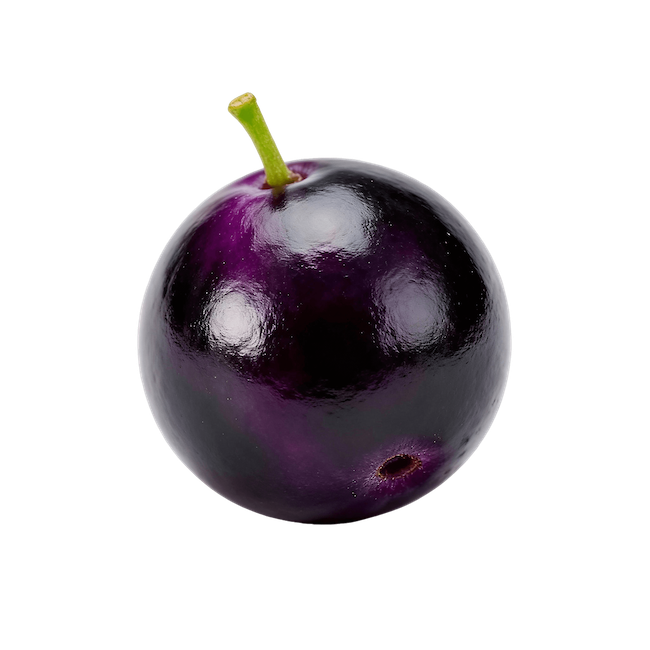
Elderberry

Elderberry

FamilyAdoxaceae
Importance
Elderberry is a small dark purple-black berry from Sambucus species, especially Sambucus nigra and Sambucus canadensis, valued for its deep pigment, tart flavor, fiber, vitamin C, vitamin B6, iron, potassium, and concentrated polyphenol profile. Per 100 g, raw elderberries are mostly water and carbohydrate, with about 73 calories, 18.4 g carbohydrate, 7.0 g fiber, modest protein, and very little fat. Their intense color comes from anthocyanins, mainly cyanidin derivatives, while their sharp flavor reflects organic acids and tannin-like phenolic compounds.

Elderberry supports everyday nourishment through fiber, vitamin C, minerals, and berry polyphenols. Fiber supports digestive movement, stool bulk, and gut microbial fermentation. Vitamin C contributes to collagen formation, antioxidant recycling, immune barrier function, and connective tissue maintenance. Potassium supports fluid balance, nerve signaling, and muscle contraction, while iron and vitamin B6 participate in normal blood and energy metabolism.

For cancer and ailment-support nutrition, elderberry is relevant because its anthocyanins, flavonols, phenolic acids, proanthocyanidins, triterpenoids, vitamin C, and fiber connect to protective biological pathways. These include Nrf2-related antioxidant response, NF-kB inflammatory signaling balance, AMPK-linked metabolic regulation, insulin-related carbohydrate handling, phase II detoxification enzyme signaling, endothelial nitric oxide activity, apoptosis-related cell signaling, and gut fermentation pathways supported by fiber. Elderberry does not act as a standalone disease solution, but its whole-fruit matrix contributes redox-active pigments, digestive fiber, and plant compounds studied for inflammatory signaling, cellular defense, vascular support, and normal metabolic function.

Elderberry phytochemicals include cyanidin-3-glucoside, cyanidin-3-sambubioside, cyanidin-3-rutinoside, quercetin derivatives, rutin, chlorogenic acid, neochlorogenic acid, caffeic acid derivatives, proanthocyanidins, anthocyanins, flavonols, phenolic acids, organic acids, and pectin. Elderberries are commonly cooked into syrups, sauces, jams, juices, fruit preparations, and culinary blends. Their strongest nutritional identity is the combination of dark anthocyanin pigment, tart acidity, fiber, vitamin C, and Sambucus-family polyphenols. They contribute berry diversity, antioxidant nutrient intake, digestive support, inflammatory signaling balance, and cellular repair pathways in a deeply colored fruit.

Region FoundElderberry grows across temperate regions of Europe, North America, western Asia, and North Africa. Sambucus nigra is strongly associated with Europe and western Asia, while Sambucus canadensis is common in eastern and central North America. Elderberry shrubs grow in hedgerows, woodland edges, riverbanks, moist fields, disturbed soils, and sunny temperate habitats.
Helps Fight These Cancers: Oral Cavity Pharynx Larynx Cancer, Esophageal Squamous Cell Carcinoma
Helps Fight These Ailments: Hyperlipidemia, Hypertension, Insulin Resistance
Linked Hormones:

All values per 100g
Nutrition Facts
Calories (kcal)73
Protein (g)0.66
Carbohydrates (g)18.41
Fiber (g)7.03
Sugars (g)0
Total Fat (g)0.5
Saturated Fat (g)0
Vitamins
Vitamin A (µg RAE)30
Vitamin C (mg)36
Vitamin D (µg)0
Vitamin E (mg)0
Vitamin K (µg)0
Vitamin B1 / Thiamin (mg)0.069
Vitamin B2 / Riboflavin (mg)0.062
Vitamin B3 / Niacin (mg)0.503
Vitamin B5 / Pantothenic Acid (mg)0.138
Vitamin B6 (mg)0.228
Vitamin B7 / Biotin (µg)0
Folate B9 (µg)6
Vitamin B12 (µg)0
Vitamin Detail Pages
Minerals
Calcium (mg)38
Iron (mg)1.59
Magnesium (mg)5.03
Phosphorus (mg)39
Potassium (mg)280
Sodium (mg)6
Zinc (mg)0.11
Copper (mg)0.062
Manganese (mg)0
Selenium (µg)0.6
Iodine (µg)0
Mineral Detail Pages
Amino Acids
Alanine (mg)0 mg
Arginine (mg)0 mg
Asparagine (mg)0 mg
Aspartic Acid (mg)0 mg
Cysteine (mg)0 mg
Glutamic Acid (mg)0 mg
Glutamine (mg)0 mg
Glycine (mg)0 mg
Histidine (mg)0 mg
Isoleucine (mg)0 mg
Leucine (mg)0 mg
Lysine (mg)0 mg
Methionine (mg)0 mg
Phenylalanine (mg)0 mg
Proline (mg)0 mg
Serine (mg)0 mg
Threonine (mg)0 mg
Tryptophan (mg)0 mg
Tyrosine (mg)0 mg
Valine (mg)0 mg
Amino Acid Detail Pages
Phytochemicals
Cyanidin-3-glucoside, cyanidin-3-sambubioside, cyanidin-3-rutinoside, anthocyanins, quercetin derivatives, rutin, chlorogenic acid, neochlorogenic acid, caffeic acid derivatives, proanthocyanidins, flavonols, phenolic acids, triterpenoids, organic acids, pectin, vitamin C, vitamin B6, potassium, and iron. Research references: Sidor A, Gramza-Michalowska A. Advanced research on the antioxidant and health benefit of elderberry Sambucus nigra in food: a review. Journal of Functional Foods. 2015. Zielińska-Wasielica J, et al. Elderberry Sambucus nigra L fruit extract alleviates oxidative stress, insulin resistance, and inflammation in hypertrophied adipocytes and activated macrophages. Molecules. 2019. Uhl K, Mitchell AE. Elderberry, an ancient remedy: a comprehensive study of the bioactive compounds in three Sambucus nigra L subspecies. Annual Review of Food Science and Technology. 2024.
Research & Notes
Research Notes:
USDA FDC via MyFoodData; page shows 145 g—values here scaled to 100 g; AAs converted mg→g; cystine→cysteine.
Notes:
Raw Sambucus nigra fruit; sugars not reported on source page.
Created: 2025-10-21 10:25:32
Last Updated: 2026-06-04 08:05:23