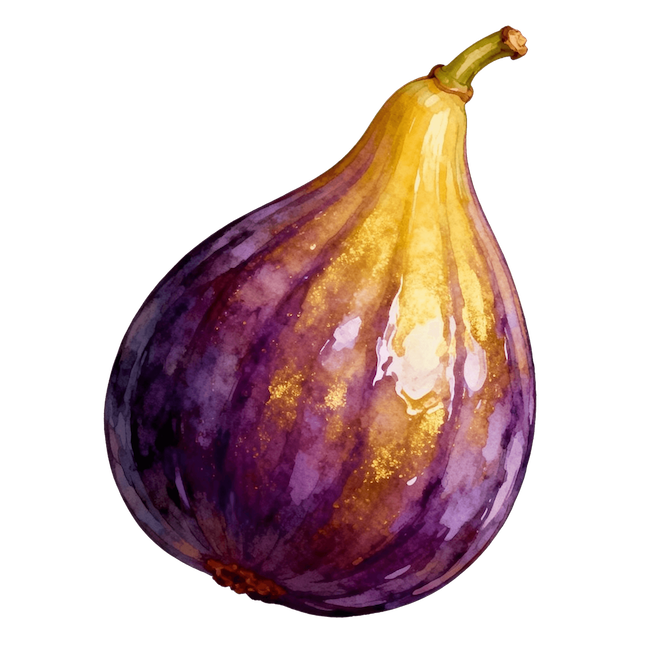
Fig

Fig

FamilyMoraceae
Importance
Fig is the soft edible fruit of Ficus carica, valued for its natural sweetness, tiny crunchy seeds, fiber, potassium, calcium, magnesium, copper, vitamin K, and concentrated plant polyphenols. Fresh figs are mostly water with natural carbohydrate, modest fiber, small amounts of protein, and very little fat. Their sweet flavor comes mainly from glucose and fructose, while the skin, pulp, and seeds provide pectin, organic acids, minerals, and phenolic compounds. Figs are botanically unusual because the edible structure is a syconium, with many tiny internal flowers and seed-like fruitlets enclosed inside the soft flesh.

Fig supports everyday nourishment through fiber, potassium, calcium, magnesium, and polyphenols. Fiber supports digestive movement, stool bulk, and gut microbial fermentation. Potassium supports fluid balance, nerve signaling, and muscle contraction. Calcium and magnesium contribute to bone mineral structure, muscle function, and ATP-related energy metabolism. Copper supports connective tissue enzymes and iron handling. Vitamin K contributes to normal blood-clotting protein activation and bone-related protein function.

For cancer and ailment-support nutrition, fig is relevant because Ficus carica fruit contains phenolic acids, flavonoids, anthocyanins, carotenoids, pectin, fiber, and minerals connected to protective biological pathways. These include Nrf2-related antioxidant response, NF-kB inflammatory signaling balance, AMPK-linked metabolic regulation, insulin-related carbohydrate handling, endothelial function, apoptosis-related cell signaling, cell-cycle regulation, and gut fermentation pathways supported by soluble fiber. Fig does not act as a standalone disease solution, but the whole fruit contributes fiber, minerals, and phytochemicals tied to cellular redox balance, digestive support, vascular function, inflammatory signaling balance, and normal metabolic function.

Fig phytochemicals include chlorogenic acid, gallic acid, syringic acid, catechin, epicatechin, rutin, quercetin derivatives, cyanidin-related anthocyanins in darker cultivars, carotenoids, pectin, organic acids, and seed-associated lipids. Figs pair well with apples, pears, berries, citrus, oats, walnuts, almonds, cinnamon, ginger, leafy greens, and whole grains. Their strongest nutritional identity is the combination of fruit sweetness, pectin-rich fiber, minerals, tiny seeds, and Ficus-family polyphenols that support digestive, antioxidant, vascular, inflammatory, and cellular repair pathways.

Region FoundFig Ficus carica is native to the Mediterranean region and western Asia, with origins extending from Asiatic Turkey toward northern India. It is widely cultivated in warm temperate and subtropical climates, including Turkey, Greece, Italy, Spain, Portugal, North Africa, the Middle East, California, Mexico, South America, Australia, and other regions with hot dry summers and mild winters.
Glycemic Index35.0
Glycemic Load5.43
Helps Fight These Cancers: Colorectal Adenocarcinoma, Oral Cavity Pharynx Larynx Cancer
Helps Fight These Ailments: Constipation, Hyperlipidemia, Hypertension
Linked Hormones:

All values per 100g
Nutrition Facts
Calories (kcal)74
Protein (g)0.75
Carbohydrates (g)19.18
Fiber (g)2.9
Sugars (g)16.26
Total Fat (g)0.3
Saturated Fat (g)0
Vitamins
Vitamin A (µg RAE)7
Vitamin C (mg)2
Vitamin D (µg)0
Vitamin E (mg)0.11
Vitamin K (µg)4.7
Vitamin B1 / Thiamin (mg)0.085
Vitamin B2 / Riboflavin (mg)0.082
Vitamin B3 / Niacin (mg)0.4
Vitamin B5 / Pantothenic Acid (mg)0.3
Vitamin B6 (mg)0.113
Vitamin B7 / Biotin (µg)0
Folate B9 (µg)6
Vitamin B12 (µg)0
Vitamin Detail Pages
Minerals
Calcium (mg)35
Iron (mg)0.37
Magnesium (mg)17
Phosphorus (mg)14
Potassium (mg)232
Sodium (mg)1
Zinc (mg)0.15
Copper (mg)0.071
Manganese (mg)0.128
Selenium (µg)0.1
Iodine (µg)0
Mineral Detail Pages
Amino Acids
Alanine (mg)45 mg
Arginine (mg)18 mg
Asparagine (mg)0 mg
Aspartic Acid (mg)203 mg
Cysteine (mg)5 mg
Glutamic Acid (mg)79 mg
Glutamine (mg)0 mg
Glycine (mg)25 mg
Histidine (mg)11 mg
Isoleucine (mg)19 mg
Leucine (mg)33 mg
Lysine (mg)30 mg
Methionine (mg)6 mg
Phenylalanine (mg)18 mg
Proline (mg)49 mg
Serine (mg)41 mg
Threonine (mg)24 mg
Tryptophan (mg)6 mg
Tyrosine (mg)32 mg
Valine (mg)28 mg
Amino Acid Detail Pages
Phytochemicals
Chlorogenic acid, gallic acid, syringic acid, catechin, epicatechin, rutin, quercetin derivatives, cyanidin-related anthocyanins in darker cultivars, carotenoids, flavonoids, phenolic acids, pectin, organic acids, seed-associated lipids, potassium, calcium, magnesium, copper, and vitamin K. Research references: Sandhu AK, et al. Phytochemical Composition and Health Benefits of Figs Fresh and Dried: A Review of Literature from 2000 to 2022. Nutrients. 2023. Rasool IF, et al. Industrial Application and Health Prospective of Fig Ficus carica L. By-products. Molecules. 2023. Solomon A, Golubowicz S, Yablowicz Z, Grossman S, Bergman M, Gottlieb HE, Altman A, Kerem Z, Flaishman MA. Antioxidant activities and anthocyanin content of fresh fruits of common fig Ficus carica L. Journal of Agricultural and Food Chemistry. 2006.
Research & Notes
Research Notes:
USDA FDC via MyFoodData; page shows 150 g — values scaled to 100 g.
Notes:
Raw fresh figs; per 100 g.
Created: 2025-10-21 10:28:32
Last Updated: 2026-06-04 08:05:23