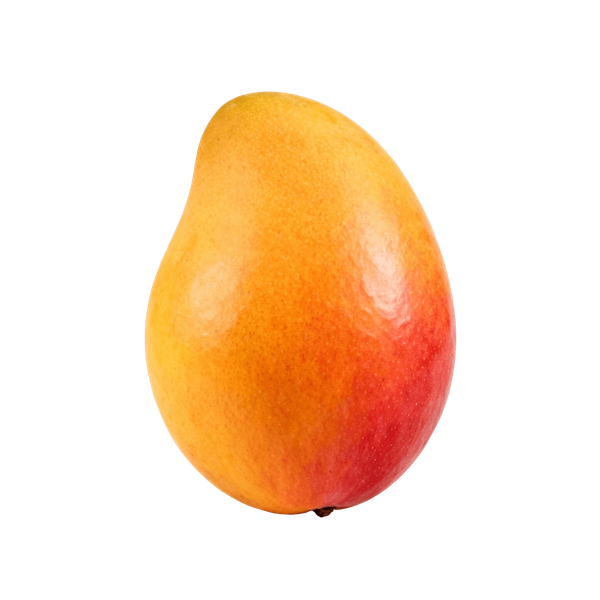
Mango

Mango

FamilyAnacardiaceae
Importance
Mango is the tropical fruit of Mangifera indica, valued for its sweet aromatic flesh, golden-orange color, vitamin C, vitamin A carotenoid activity, fiber, potassium, copper, folate, vitamin E, and mango-family polyphenols. Per 100 g, raw mango provides about 60 calories, 15.0 g carbohydrate, 1.6 g fiber, 0.82 g protein, and very little fat. Its natural sugars occur within a whole fruit matrix that includes water, fiber, organic acids, minerals, carotenoids, and phytochemicals. The orange-yellow color reflects carotenoids such as beta-carotene, violaxanthin, lutein-related pigments, and other xanthophylls.

Mango supports everyday nourishment through vitamin C, fiber, carotenoids, potassium, copper, and folate. Vitamin C contributes to collagen formation, antioxidant recycling, immune barrier function, and connective tissue maintenance. Fiber supports digestive movement, stool bulk, and microbial fermentation. Potassium supports fluid balance, nerve signaling, and muscle contraction. Folate participates in one-carbon metabolism and DNA synthesis, while copper supports connective tissue enzyme systems and iron handling.

For cancer and ailment-support nutrition, mango is relevant because Mangifera indica fruit contains mangiferin, gallotannins, gallic acid, quercetin derivatives, catechins, carotenoids, chlorogenic acid, caffeic acid derivatives, vitamin C, pectin, and other antioxidant-active compounds. These compounds connect to Nrf2-related antioxidant response, NF-kB inflammatory signaling balance, AMPK-linked metabolic regulation, insulin-related carbohydrate handling, endothelial function, phase II detoxification enzyme signaling, apoptosis-related cell signaling, cell-cycle regulation, and gut fermentation pathways supported by fiber. Mango does not act as a standalone disease solution, but the whole fruit contributes antioxidant nutrients, digestive fiber, carotenoids, minerals, and plant compounds tied to cellular repair, inflammatory signaling balance, vascular support, digestive function, and normal metabolic regulation.

Mango pairs well with citrus, berries, banana, pineapple, coconut, oats, mint, ginger, leafy greens, walnuts, almonds, legumes, and whole grains. Its strongest nutritional identity is the combination of vitamin C-rich tropical flesh, carotenoid color, pectin-rich fiber, potassium, copper, folate, mangiferin-related chemistry, and Mangifera-family polyphenols connected to antioxidant, digestive, vascular, metabolic, inflammatory, and cellular repair pathways.

Region FoundMango Mangifera indica originated in South Asia, especially the Indian subcontinent, and is now cultivated throughout tropical and subtropical regions worldwide. Major growing areas include India, Pakistan, Bangladesh, Thailand, Vietnam, the Philippines, Indonesia, Mexico, Brazil, Peru, Egypt, Kenya, Nigeria, South Africa, Australia, Florida, Hawaii, and other warm frost-free regions.
Glycemic Index51.0
Glycemic Load6.82
Helps Fight These Cancers: Gastric Cancer, Colon Cancer, Oral Cavity Pharynx Larynx Cancer
Helps Fight These Ailments: Hyperlipidemia, Hypertension, Insulin Resistance
Linked Hormones:

All values per 100g
Nutrition Facts
Calories (kcal)60
Protein (g)0.85
Carbohydrates (g)14.97
Fiber (g)1.58
Sugars (g)13.64
Total Fat (g)0.38
Saturated Fat (g)0
Vitamins
Vitamin A (µg RAE)54
Vitamin C (mg)36.42
Vitamin D (µg)0
Vitamin E (mg)0.91
Vitamin K (µg)4.18
Vitamin B1 / Thiamin (mg)0.03
Vitamin B2 / Riboflavin (mg)0.04
Vitamin B3 / Niacin (mg)0.67
Vitamin B5 / Pantothenic Acid (mg)0.2
Vitamin B6 (mg)0.12
Vitamin B7 / Biotin (µg)0
Folate B9 (µg)43
Vitamin B12 (µg)0
Vitamin Detail Pages
Minerals
Calcium (mg)11.03
Iron (mg)0.16
Magnesium (mg)10
Phosphorus (mg)14
Potassium (mg)168
Sodium (mg)1.03
Zinc (mg)0.09
Copper (mg)0.11
Manganese (mg)0.06
Selenium (µg)0.6
Iodine (µg)0.1
Mineral Detail Pages
Amino Acids
Alanine (mg)82 mg
Arginine (mg)31 mg
Asparagine (mg)0 mg
Aspartic Acid (mg)68 mg
Cysteine (mg)14 mg
Glutamic Acid (mg)96 mg
Glutamine (mg)0 mg
Glycine (mg)34 mg
Histidine (mg)19 mg
Isoleucine (mg)29 mg
Leucine (mg)50 mg
Lysine (mg)66 mg
Methionine (mg)8 mg
Phenylalanine (mg)27 mg
Proline (mg)29 mg
Serine (mg)35 mg
Threonine (mg)31 mg
Tryptophan (mg)13 mg
Tyrosine (mg)16 mg
Valine (mg)42 mg
Amino Acid Detail Pages
Phytochemicals
Mangiferin, gallotannins, gallic acid, quercetin derivatives, catechins, chlorogenic acid, caffeic acid derivatives, beta-carotene, violaxanthin, lutein-related pigments, zeaxanthin, carotenoids, xanthophylls, pectin, organic acids, vitamin C, vitamin E, folate, potassium, copper, and Mangifera indica polyphenols. Research references: Maldonado-Celis ME, Yahia EM, Bedoya R, Landázuri P, Loango N, Aguillón J, Restrepo B, Guerrero Ospina JC. Chemical Composition of Mango Mangifera indica L. Fruit: Nutritional and Phytochemical Compounds. Frontiers in Plant Science. 2019. Lebaka VR, Wee YJ, Ye W, Korivi M. Nutritional Composition and Bioactive Compounds in Three Different Parts of Mango Fruit. International Journal of Environmental Research and Public Health. 2021. Gold-Smith F, Fernandez A, Bishop K. Mangiferin and Cancer: Mechanisms of Action. Nutrients. 2016.
Research & Notes
Research Notes:
USDA FDC via MyFoodData; 165 g panel scaled to 100 g; AA mg→g; cystine not reported.
Notes:
Raw mango flesh; per 100 g.
Created: 2025-10-21 11:06:44
Last Updated: 2026-06-04 08:05:23