Importance
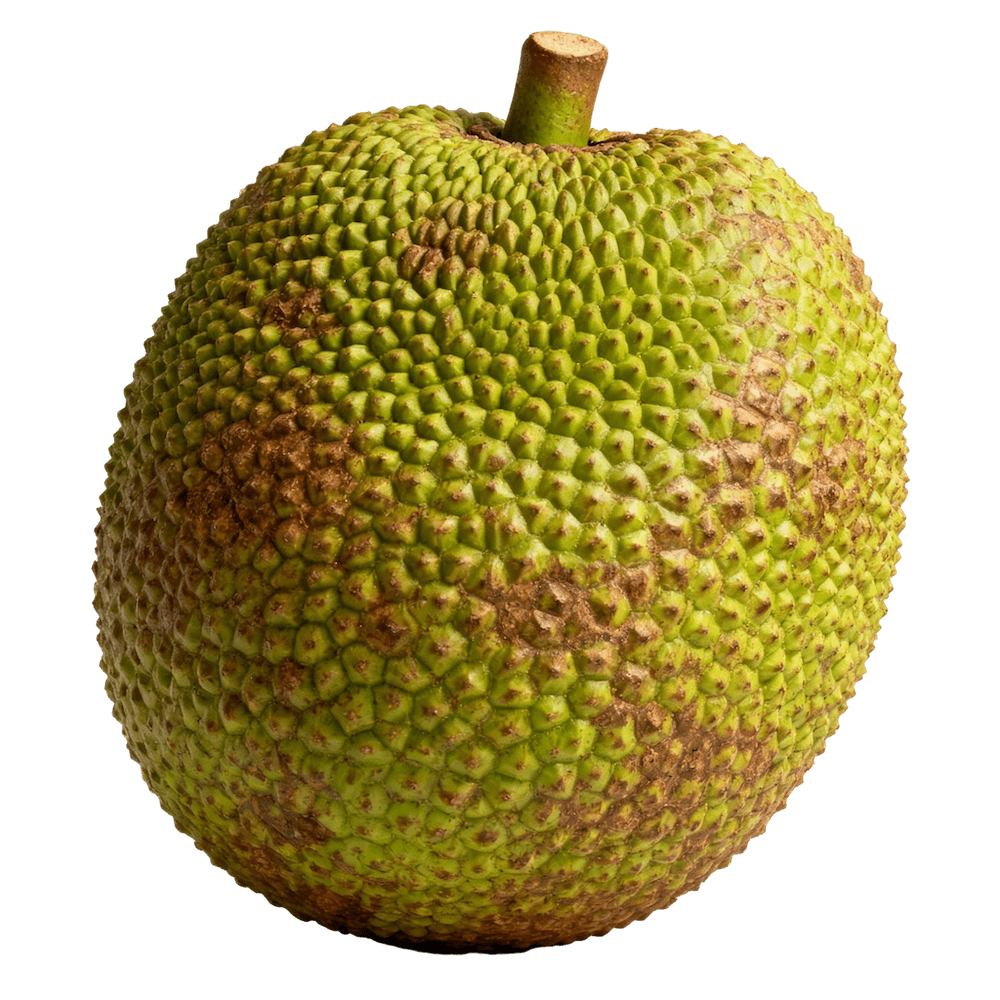
Breadfruit is a starchy tropical fruit from Artocarpus altilis, valued as a carbohydrate-rich whole food with fiber, potassium, vitamin C, magnesium, phosphorus, thiamin, niacin, and small amounts of essential amino acids. Unlike juicy dessert fruits, mature breadfruit has a firm texture and mild flavor that becomes soft, dense, and bread-like when cooked. Per 100 g raw, breadfruit provides about 103 calories, 27.1 g carbohydrate, 4.9 g fiber, 1.1 g protein, 0.23 g fat, 29 mg vitamin C, and 490 mg potassium. Its starch and fiber make it more similar to a tropical staple crop than a sweet snack fruit.
Breadfruit supports steady nourishment through complex carbohydrate, resistant starch, fiber, and micronutrients. Its carbohydrate content supplies glucose after digestion, while its fiber slows digestive movement and supports microbial fermentation in the colon. Potassium contributes to normal fluid balance, muscle contraction, and nerve signaling. Vitamin C supports collagen formation, antioxidant recycling, and immune barrier function. Magnesium and phosphorus participate in ATP metabolism, bone mineral structure, and cellular energy pathways. Thiamin and niacin support carbohydrate oxidation and mitochondrial energy production.
Breadfruit is relevant to cancer and ailment-support nutrition because its fiber, phenolic compounds, carotenoids, vitamin C, and mineral profile connect to several protective biological pathways. These include antioxidant response through Nrf2-related signaling, inflammatory signaling balance involving NF-kB, carbohydrate metabolism through AMPK and insulin-related pathways, gut-derived short-chain fatty acid production from fermentable fiber, and cellular repair systems that depend on adequate micronutrient intake. Breadfruit does not act as a standalone disease solution, but as part of a whole-food pattern it contributes fiber, resistant starch, potassium, vitamin C, and phytochemicals that support metabolic, digestive, vascular, and cellular resilience.
Breadfruit phytochemistry includes flavonoids, phenolic acids, carotenoids, phytosterols, triterpenes, stilbenoid-related compounds, lectin-type proteins, and small amounts of lutein and zeaxanthin. The exact profile varies by cultivar, maturity, soil, climate, and cooking method. Cooked breadfruit is commonly roasted, steamed, baked, boiled, or mashed, and it pairs well with legumes, greens, herbs, peppers, onions, tomatoes, citrus, and other vegetables.
Breadfruit’s strongest nutritional identity is its combination of complex carbohydrate, fiber, potassium, vitamin C, and tropical staple-food versatility. It provides more sustained energy than many watery fruits while remaining naturally low in fat. Its fiber-rich structure, mineral content, and plant compounds make it useful in meals focused on digestive support, energy metabolism, vascular balance, and color-diverse whole-food eating.