Importance
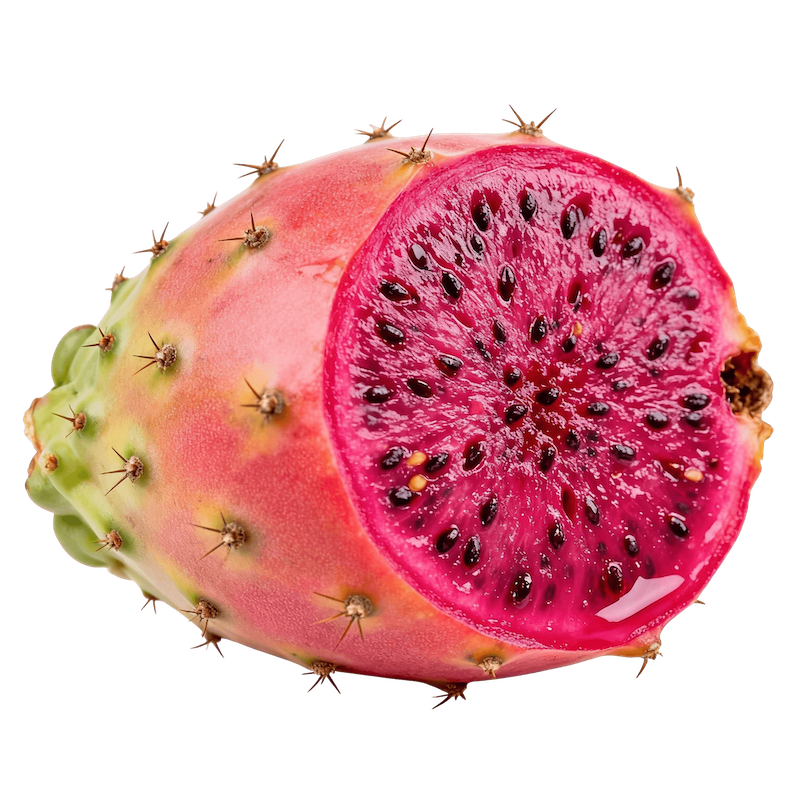
Cactus pear is the colorful fruit of Opuntia species, especially Opuntia ficus-indica, and is also called prickly pear. The fruit has a soft juicy pulp, edible seeds, mild sweetness, and colors that range from pale green and yellow to orange, red, and deep purple. Per 100 g, cactus pear is mostly water with natural carbohydrate, fiber, magnesium, potassium, calcium, vitamin C, and small amounts of B vitamins. Its fiber, minerals, pigments, and low fat content make it a distinctive desert fruit with a nutrient profile different from tropical sweet fruits.
Cactus pear is especially notable for betalain pigments, including betanin, indicaxanthin, and related betacyanins and betaxanthins. These pigments are the same broad color family found in beets, but cactus pear has its own variety-specific patterns. Purple and red cactus pears tend to contain more betacyanins, while yellow and orange fruits contain more betaxanthins. The fruit also contains phenolic acids, flavonoids, vitamin C, pectin, mucilage-like soluble fiber, organic acids, and seed-associated lipids.
For cancer and ailment-support nutrition, cactus pear is relevant because its betalains, vitamin C, fiber, and phenolic compounds connect to antioxidant response, inflammatory signaling balance, glucose-handling pathways, endothelial function, and gut fermentation. Research on cactus pear and Opuntia products has examined redox balance, lipid oxidation, post-meal glucose response, insulin response, alpha-glucosidase activity, alpha-amylase activity, and phenolic antioxidant capacity. These pathways include Nrf2-related antioxidant defense, NF-kB inflammatory signaling balance, AMPK-related metabolic regulation, carbohydrate digestion through amylase and glucosidase enzymes, and short-chain fatty acid production from fermentable fiber.
Cactus pear is hydrating and mineral-rich, with a pleasant melon-like flavor in many varieties. The seeds add texture and contribute fiber, while the pulp provides pigment-rich juice and natural sweetness. It works well in smoothies, fruit bowls, sauces, salads, citrus blends, frozen fruit preparations, and fresh slices after the skin and glochids are removed. The fruit pairs naturally with lime, orange, berries, melon, mint, cucumber, leafy greens, and whole grains.
Cactus pear has its strongest nutritional identity in its combination of desert-fruit hydration, soluble fiber, magnesium, vitamin C, potassium, and betalain pigments. It contributes color diversity, antioxidant chemistry, digestive support, and carbohydrate-metabolism relevance in a whole-food form. Its pigment profile makes it one of the few commonly eaten fruits where betalains, rather than anthocyanins, are the main red-purple and yellow-orange color compounds.