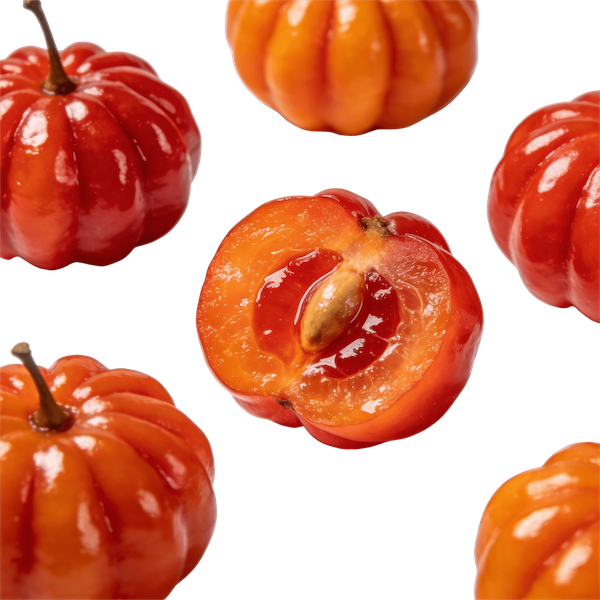
Pitanga (Surinam cherry)

Pitanga (Surinam cherry)

FamilyMyrtaceae
Importance
Pitanga is the small ribbed fruit of Eugenia uniflora, also known as Surinam cherry, Brazilian cherry, or Cayenne cherry. It is valued for its tart-sweet flavor, strong aroma, vitamin C, carotenoid pigments, anthocyanins in darker fruits, phenolic compounds, organic acids, and Myrtaceae-family phytochemistry. The fruit can ripen through orange, red, dark red, or purple-black colors depending on type and maturity. Its flavor is bright, resinous, fruity, acidic, and sometimes slightly spicy, making it useful in juices, sauces, jams, fruit preparations, frozen pulp, and fresh eating when fully ripe.

Pitanga supports everyday nourishment through vitamin C, carotenoids, fiber, minerals, and antioxidant-active plant compounds. Vitamin C contributes to collagen formation, antioxidant recycling, immune barrier function, and connective tissue maintenance. Fiber supports digestive movement, stool bulk, and microbial fermentation. Carotenoids such as beta-carotene, beta-cryptoxanthin, lycopene, lutein, and zeaxanthin contribute orange-red pigment chemistry and antioxidant activity. Potassium supports fluid balance, nerve signaling, and muscle contraction.

For cancer and ailment-support nutrition, pitanga is relevant because Eugenia uniflora fruit contains anthocyanins, carotenoids, flavonoids, phenolic acids, tannins, ellagic acid-related compounds, gallic acid derivatives, quercetin derivatives, myricetin derivatives, and volatile terpenes. These compounds connect to Nrf2-related antioxidant response, NF-kB inflammatory signaling balance, AMPK-linked metabolic regulation, insulin-related carbohydrate handling, endothelial function, phase II detoxification enzyme signaling, apoptosis-related cell signaling, and gut fermentation pathways supported by fiber. Pitanga does not act as a standalone disease solution, but the whole fruit contributes antioxidant pigments, vitamin C, digestive fiber, minerals, and plant compounds tied to cellular repair, inflammatory signaling balance, vascular support, digestive function, and normal metabolic regulation.

Pitanga pairs well with citrus, mango, pineapple, banana, berries, coconut, mint, ginger, oats, leafy greens, and whole grains. Its strongest nutritional identity is the combination of tropical tartness, carotenoid-rich orange-red color, anthocyanins in purple varieties, vitamin C, phenolic compounds, volatile aroma compounds, and Eugenia-family phytochemicals connected to antioxidant, digestive, vascular, metabolic, inflammatory, and cellular defense pathways.

Region FoundPitanga Eugenia uniflora is native to tropical and subtropical South America, especially Brazil, Uruguay, Paraguay, Argentina, Suriname, French Guiana, and nearby regions. It is also cultivated or naturalized in Florida, the Caribbean, Central America, Hawaii, parts of Africa, India, Southeast Asia, and other warm frost-free or lightly subtropical regions.
Helps Fight These Cancers: Oral Cavity Pharynx Larynx Cancer, Colon Cancer, Gastric Cancer
Helps Fight These Ailments: Immune Support, Skin Health, Hyperlipidemia
Linked Hormones:

All values per 100g
Nutrition Facts
Calories (kcal)33
Protein (g)0.8
Carbohydrates (g)7.49
Fiber (g)2.67
Sugars (g)0
Total Fat (g)0.4
Saturated Fat (g)0
Vitamins
Vitamin A (µg RAE)0
Vitamin C (mg)26.3
Vitamin D (µg)0
Vitamin E (mg)0
Vitamin K (µg)0
Vitamin B1 / Thiamin (mg)0.03
Vitamin B2 / Riboflavin (mg)0.04
Vitamin B3 / Niacin (mg)0.3
Vitamin B5 / Pantothenic Acid (mg)0
Vitamin B6 (mg)0
Vitamin B7 / Biotin (µg)0
Folate B9 (µg)0
Vitamin B12 (µg)0
Vitamin Detail Pages
Minerals
Calcium (mg)9
Iron (mg)0.2
Magnesium (mg)12
Phosphorus (mg)11
Potassium (mg)103
Sodium (mg)3
Zinc (mg)0
Copper (mg)0
Manganese (mg)0
Selenium (µg)0
Iodine (µg)0
Mineral Detail Pages
Amino Acids
Alanine (mg)0 mg
Arginine (mg)0 mg
Asparagine (mg)0 mg
Aspartic Acid (mg)0 mg
Cysteine (mg)0 mg
Glutamic Acid (mg)0 mg
Glutamine (mg)0 mg
Glycine (mg)0 mg
Histidine (mg)0 mg
Isoleucine (mg)0 mg
Leucine (mg)0 mg
Lysine (mg)0 mg
Methionine (mg)0 mg
Phenylalanine (mg)0 mg
Proline (mg)0 mg
Serine (mg)0 mg
Threonine (mg)0 mg
Tryptophan (mg)0 mg
Tyrosine (mg)0 mg
Valine (mg)0 mg
Amino Acid Detail Pages
Phytochemicals
Vitamin C, beta-carotene, beta-cryptoxanthin, lycopene, lutein, zeaxanthin, carotenoids, anthocyanins, phenolic acids, flavonoids, tannins, ellagic acid-related compounds, gallic acid derivatives, quercetin derivatives, myricetin derivatives, catechin-related compounds, organic acids, volatile terpenes, pectin, potassium, calcium, magnesium, and Eugenia uniflora bioactive compounds. Research references: Fidelis M, et al. Pitanga Eugenia uniflora L. as a source of bioactive compounds for health benefits: A review. Arabian Journal of Chemistry. 2022. Bagetti M, et al. Physicochemical characterization and antioxidant capacity of pitanga fruits Eugenia uniflora L. Food Science and Technology. 2011. Migues I, et al. Phenolic Profiling and Antioxidant Capacity of Eugenia uniflora L. Fruits. Foods. 2018.
Research & Notes
Research Notes:
Brazilian academic food table per-100 g; phenolic profile from peer-reviewed *Eugenia uniflora* analyses.
Notes:
Fresh pitanga edible portion; per 100 g.
Created: 2025-10-21 12:51:14
Last Updated: 2026-06-04 08:05:23