Importance
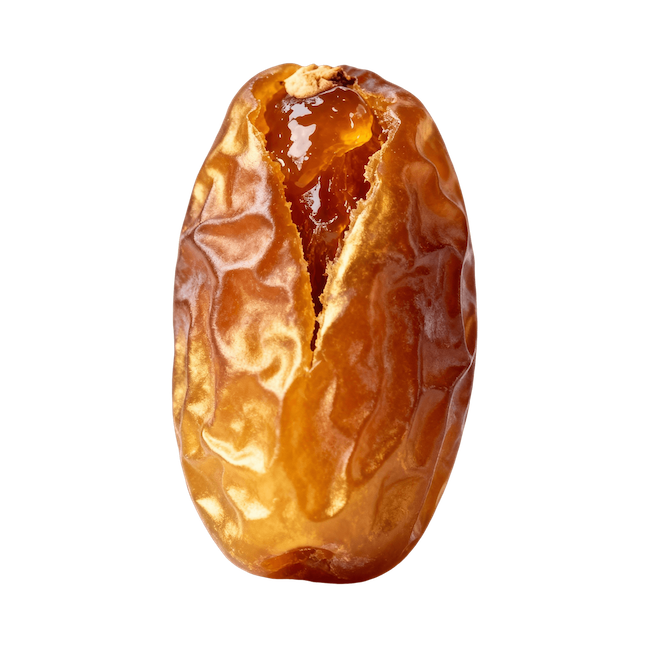
Medjool date is the soft, large fruit of Phoenix dactylifera, valued for its natural sweetness, chewy texture, fiber, potassium, copper, magnesium, manganese, vitamin B6, and concentrated phenolic compounds. Per 100 g, Medjool dates provide about 277 calories, 75 g carbohydrate, 6.7 g fiber, 1.8 g protein, and very little fat. Most of the carbohydrate is naturally occurring glucose and fructose, carried within a whole-fruit matrix that also contains fiber, minerals, organic acids, and polyphenols. This makes Medjool date a concentrated energy fruit rather than a watery fruit.
Medjool dates support everyday nourishment through potassium, fiber, copper, magnesium, and antioxidant-active plant compounds. Potassium supports fluid balance, muscle contraction, and nerve signaling. Fiber supports digestive movement, stool bulk, and gut microbial fermentation. Copper participates in connective tissue enzymes and iron handling. Magnesium supports ATP metabolism and normal muscle function, while vitamin B6 contributes to amino acid metabolism and normal nervous system function.
For cancer and ailment-support nutrition, Medjool dates are relevant because dates contain phenolic acids, flavonoids, carotenoids, tannins, fiber, and minerals that connect to protective biological pathways. These include Nrf2-related antioxidant response, NF-kB inflammatory signaling balance, AMPK-related energy regulation, insulin-related carbohydrate handling, endothelial function, apoptosis-related cell signaling, and gut fermentation pathways supported by fiber. Medjool dates do not act as a standalone disease solution, but the whole fruit contributes minerals, fiber, and phytochemicals tied to cellular redox balance, digestive support, vascular function, and normal metabolic signaling.
Medjool dates are commonly eaten whole after removing the pit, chopped into oats, blended into smoothies, used in fruit-and-nut mixtures, or paired with apples, bananas, berries, citrus, cinnamon, cacao, walnuts, almonds, oats, and whole grains. Their dense sweetness can help bind whole-food mixtures while adding potassium and fiber.
Medjool date’s strongest nutritional identity is its combination of natural fruit sugars, soluble and insoluble fiber, potassium, copper, magnesium, vitamin B6, and date palm polyphenols. It provides concentrated plant-based energy, mineral density, and digestive-supporting fiber in a compact fruit. Its pathways are strongest in carbohydrate metabolism, antioxidant defense, inflammatory signaling balance, gut fermentation, vascular function, and cellular repair systems supported by whole-fruit nutrients.