Importance
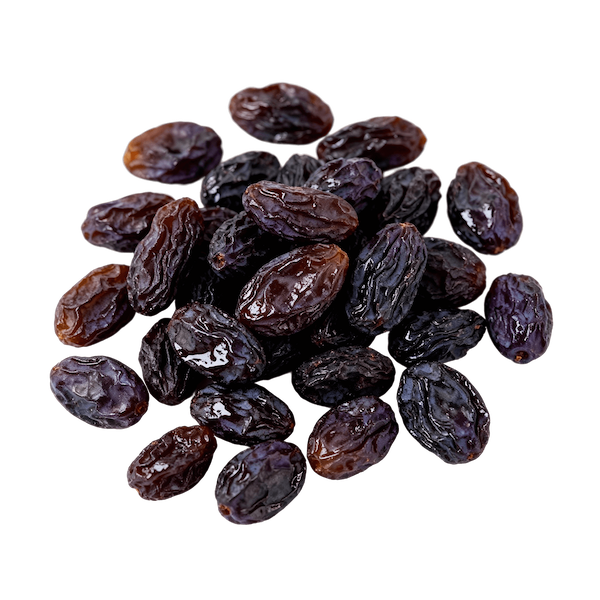
Dark seedless raisins are dried grapes, usually from seedless Vitis vinifera cultivars, valued for concentrated natural sugars, fiber, potassium, iron, copper, boron, phenolic acids, and grape-family polyphenols. Drying removes much of the water from fresh grapes, concentrating carbohydrate, minerals, fiber, and phytochemicals into a small portion. Per 100 g, dark seedless raisins provide about 299 calories, 79.2 g carbohydrate, 3.7 g fiber, 3.1 g protein, and very little fat. Their carbohydrate is mainly glucose and fructose, carried with fiber, tartaric acid, minerals, and polyphenols from grape skin and pulp.
Raisins support everyday nourishment through carbohydrate energy, potassium, iron, copper, fiber, and grape phenolics. Potassium supports fluid balance, nerve signaling, and muscle contraction. Iron participates in oxygen transport and cellular energy metabolism. Copper supports connective tissue enzyme systems, iron handling, and redox balance. Fiber supports digestive movement, stool bulk, and microbial fermentation. Tartaric acid is a characteristic grape acid that reaches the colon and may influence digestive fermentation patterns.
For cancer and ailment-support nutrition, dark seedless raisins are relevant because dried grapes contain phenolic acids, catechins, quercetin derivatives, kaempferol derivatives, procyanidins, anthocyanin-related pigments in darker raisins, resveratrol-related compounds, tartaric acid, and fiber. These compounds connect to Nrf2-related antioxidant response, NF-kB inflammatory signaling balance, AMPK-linked metabolic regulation, insulin-related carbohydrate handling, endothelial function, phase II detoxification enzyme signaling, apoptosis-related cell signaling, and gut fermentation pathways supported by fiber. Raisins do not act as a standalone disease solution, but the whole dried fruit contributes minerals, digestive fiber, grape polyphenols, and organic acids tied to cellular repair, inflammatory signaling balance, vascular support, digestive function, and normal metabolic regulation.
Raisins pair well with oats, apples, pears, citrus, berries, cinnamon, ginger, walnuts, almonds, leafy greens, lentils, and whole grains. Their strongest nutritional identity is the combination of concentrated grape sugars, potassium, iron, copper, fiber, tartaric acid, catechins, quercetin derivatives, and Vitis-family polyphenols connected to digestive, antioxidant, vascular, metabolic, inflammatory, and cellular defense pathways.