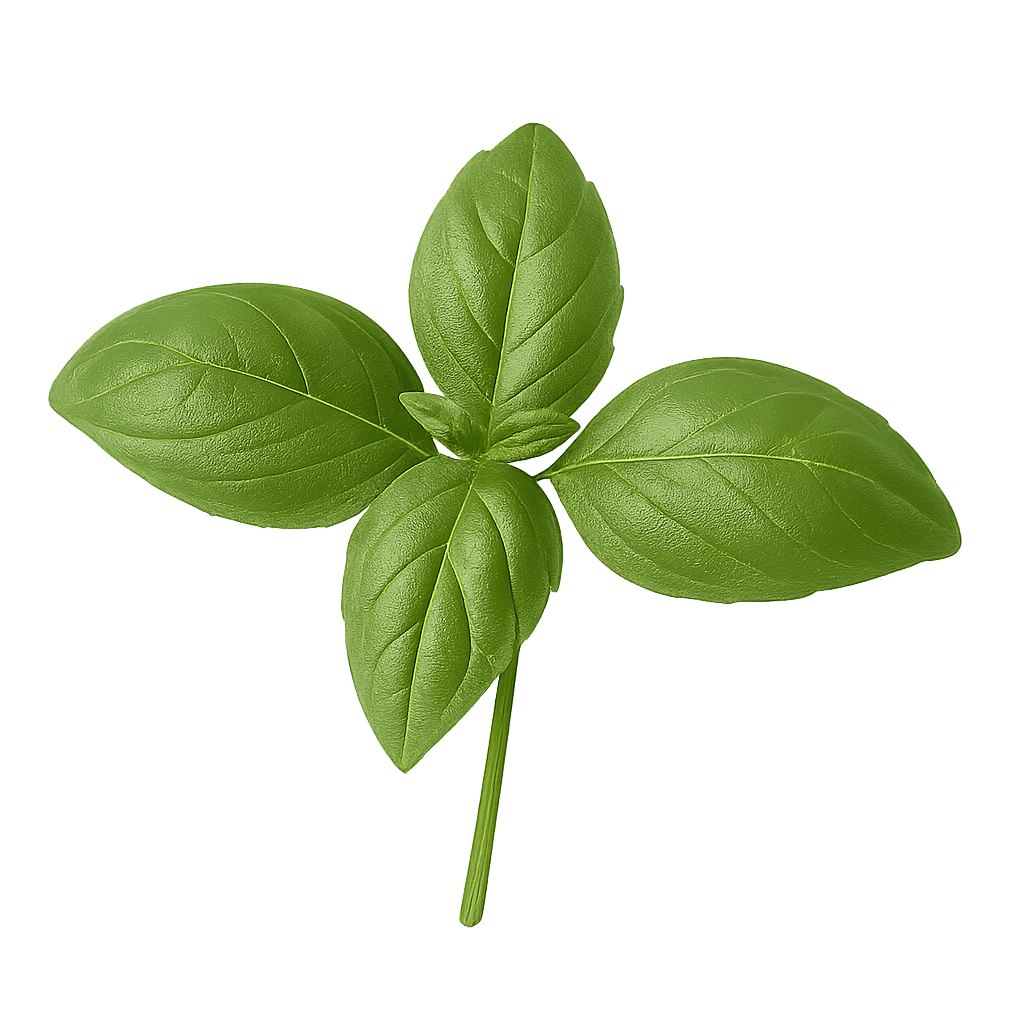
Basil (Fresh, Raw)

Basil (Fresh, Raw)

FamilyLamiaceae
Importance
Fresh raw basil is an aromatic leafy herb with a nutrient profile built around vitamin K activity, carotenoids, vitamin C, calcium, magnesium, manganese, iron, potassium, fiber, essential oils, phenolic acids, flavonoids, and antioxidant compounds. Its strongest nutritional identity is phytochemical density rather than calories. Fresh basil leaves supply eugenol, linalool, methyl chavicol, methyl eugenol, 1,8-cineole, rosmarinic acid, caffeic acid, chicoric acid, caftaric acid, orientin, vicenin, quercetin derivatives, lutein, beta-carotene, and other plant compounds that support antioxidant and inflammatory balance.

Basil supports cellular health through pathways tied to oxidative stress control, lipid protection, and inflammatory signaling. Rosmarinic acid, eugenol, linalool, flavonoids, and carotenoids help protect lipids, proteins, and cell membranes from oxidative injury. These compounds connect basil to Nrf2 antioxidant response, NF-kB inflammatory signaling balance, mitochondrial protection, lipid oxidation defense, DNA protection, and normal cellular repair. These pathways matter because long-term oxidative stress and persistent inflammatory signaling can place pressure on immune communication, blood vessels, connective tissue, and cellular maintenance.

In cancer-supportive nutrition patterns, fresh basil is most relevant for its polyphenols, essential oils, carotenoids, vitamin K activity, vitamin C, magnesium, manganese, and antioxidant capacity. Lutein and beta-carotene contribute carotenoid support, while rosmarinic acid and flavonoids support redox balance and inflammatory regulation. Fiber supports digestive function and gut microbial fermentation, helping maintain colon barrier integrity and immune signaling. Magnesium supports ATP metabolism, manganese supports antioxidant enzyme systems, iron supports oxygen handling, and potassium supports fluid and electrical balance.

Fresh basil also provides small amounts of amino acids, including glutamic acid, aspartic acid, leucine, lysine, valine, alanine, arginine, glycine, and serine. Because basil is usually eaten in modest amounts, its strongest role is not protein density, but concentrated phytochemical support. Its low calorie and very low glycemic load make it useful as a fresh herb that adds protective plant chemistry without adding meaningful sugar or starch.

Fresh raw basil supports digestive balance, immune regulation, cardiovascular steadiness, cellular repair, skin and collagen support, and long-term antioxidant protection through its combined essential oils, polyphenols, carotenoids, minerals, fiber, and leafy-green micronutrient profile.

Region FoundNative to tropical regions of Asia and Africa; widely cultivated in the Mediterranean region, India, Southeast Asia, Europe, North America, and warm herb-growing regions worldwide
Glycemic Load0.00
Helps Fight These Cancers: Colorectal Cancer, Oral Cancer, Gastric Cancer (Adjunct Antioxidant And Inflammatory Pathway Support — Not A Stand Alone Treatment)
Helps Fight These Ailments: Chronic Inflammation, Elevated LDL, Mild Hypertension, Gut Inflammatory Irritation, Oxidative Stress
SUMMARY OF EFFECTS ON THE BODY
Immune System
Polyphenols modulate inflammatory signaling
Cardiovascular
Potassium supports vascular tone; phenolics aid endothelial function
Digestive System
Aromatic compounds may support gastric comfort
Skin & Collagen
Antioxidants help limit oxidative damage to collagen
Cellular Repair
Phenolics assist redox balance and DNA-protective pathways

All values per 100g
Nutrition Facts
Calories (kcal)23
Protein (g)3.15
Carbohydrates (g)2.65
Fiber (g)1.6
Sugars (g)0.3
Total Fat (g)0.64
Saturated Fat (g)0.04
Vitamins
Vitamin A (µg RAE)264
Vitamin C (mg)18
Vitamin D (µg)0
Vitamin E (mg)0.8
Vitamin K (µg)415
Vitamin B1 / Thiamin (mg)0.034
Vitamin B2 / Riboflavin (mg)0.076
Vitamin B3 / Niacin (mg)0.902
Vitamin B5 / Pantothenic Acid (mg)0.209
Vitamin B6 (mg)0.155
Vitamin B7 / Biotin (µg)0
Folate B9 (µg)68
Vitamin B12 (µg)0
Vitamin Detail Pages
Minerals
Calcium (mg)177
Iron (mg)3.17
Magnesium (mg)64
Phosphorus (mg)56
Potassium (mg)295
Sodium (mg)4
Zinc (mg)0.81
Copper (mg)0.39
Manganese (mg)1.15
Selenium (µg)0.3
Iodine (µg)0
Mineral Detail Pages
Amino Acids
Alanine (mg)132 mg
Arginine (mg)117 mg
Asparagine (mg)0 mg
Aspartic Acid (mg)317 mg
Cysteine (mg)28 mg
Glutamic Acid (mg)290 mg
Glutamine (mg)0 mg
Glycine (mg)124 mg
Histidine (mg)52 mg
Isoleucine (mg)104 mg
Leucine (mg)191 mg
Lysine (mg)110 mg
Methionine (mg)36 mg
Phenylalanine (mg)128 mg
Proline (mg)104 mg
Serine (mg)100 mg
Threonine (mg)104 mg
Tryptophan (mg)39 mg
Tyrosine (mg)78 mg
Valine (mg)128 mg
Amino Acid Detail Pages
Phytochemicals
Eugenol, linalool, methyl chavicol, methyl eugenol, 1,8-cineole, rosmarinic acid, caffeic acid, chicoric acid, caftaric acid, orientin, vicenin, quercetin derivatives, apigenin derivatives, luteolin derivatives, lutein, beta-carotene, flavonoids, phenolic acids, carotenoids, terpenoids
Research & Notes
Research Notes:
Per 100 g. Core macros & vitamins/minerals from USDA/FDC–derived datasets for basil, fresh/raw. GI/GL not published; amino-acid panel largely not reported for basil → set NULL where unavailable.
Notes:
Use fresh to preserve volatile oils; add near end of cooking.
Created: 2025-11-08 13:31:53
Last Updated: 2026-06-04 08:14:51