Importance
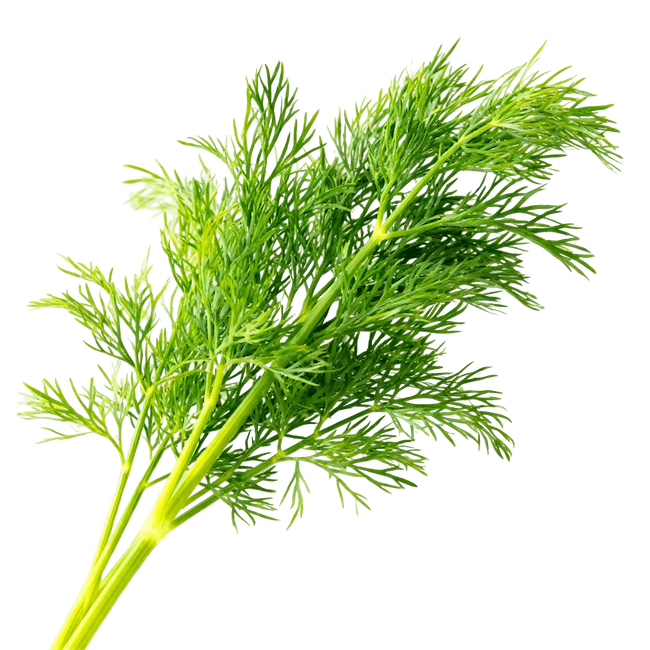
Fresh dill weed is an aromatic leafy herb from Anethum graveolens with a nutrient profile built around vitamin C, vitamin A carotenoids, vitamin K activity, calcium, iron, magnesium, potassium, manganese, fiber, volatile oils, flavonoids, phenolic acids, and antioxidant compounds. Its strongest nutritional identity is fresh-leaf phytochemistry rather than calories. Dill contains carvone, limonene, alpha-phellandrene, dill ether, anethofuran, myristicin, apiol, quercetin derivatives, kaempferol derivatives, chlorogenic acid, caffeic acid, ferulic acid, carotenoids, chlorophyll, and other aromatic compounds that support antioxidant and inflammatory balance.
Dill supports digestive and metabolic pathways through its essential oils, fiber, minerals, and polyphenol chemistry. Anethum graveolens research describes glucose-lowering and lipid-support activity, connecting dill to insulin-related metabolic signaling, carbohydrate handling, mitochondrial workload, endothelial function, and oxidative stress control. These pathways matter because repeated glucose stress and lipid oxidation can increase reactive oxygen production, inflammatory signaling, and pressure on cellular repair systems.
The antioxidant value of fresh dill comes from flavonoids, phenolic acids, carotenoids, vitamin C, and volatile leaf compounds. These compounds connect dill to Nrf2 antioxidant response, NF-kB inflammatory signaling balance, lipid oxidation defense, mitochondrial protection, DNA protection, and normal repair signaling. In cancer-supportive nutrition patterns, dill is most relevant for its leafy-green antioxidants, aromatic monoterpenes, flavonoids, carotenoids, vitamin C, mineral cofactors, and fiber. These nutrients support cellular resilience by helping regulate oxidative pressure, inflammatory communication, gut barrier function, immune signaling, and tissue repair.
Fresh dill also provides small amounts of amino acids, including glutamic acid, aspartic acid, alanine, arginine, leucine, lysine, valine, glycine, and serine. Because dill is usually eaten in modest culinary amounts, its strongest role is phytochemical and micronutrient support rather than protein density. Potassium supports fluid and electrical balance, magnesium supports ATP metabolism, calcium supports cell signaling and structure, and iron supports oxygen transport.
Fresh dill weed is best understood as a low-calorie whole-food herb that adds antioxidant chemistry, aromatic compounds, minerals, color pigments, and fiber with very low glycemic impact. It supports digestive balance, metabolic steadiness, immune regulation, cardiovascular function, cellular repair, skin and collagen support, and long-term antioxidant protection through its combined volatile oils, flavonoids, phenolic acids, carotenoids, minerals, and fresh-leaf phytochemistry.