Importance
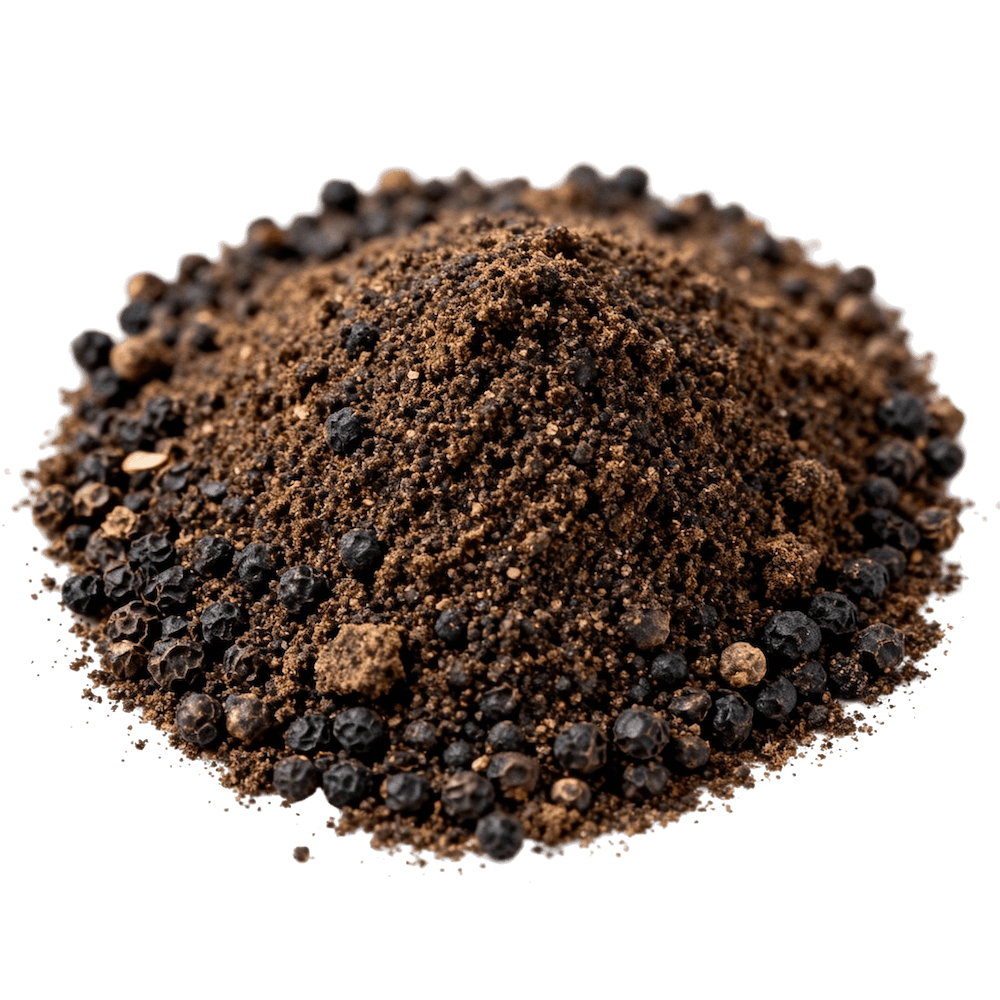
Ground black pepper is a concentrated spice from Piper nigrum with a strong phytochemical identity built around piperine, volatile oils, phenolic compounds, minerals, fiber, and antioxidant activity. Its best-known compound is piperine, the pungent alkaloid responsible for black pepper’s sharp heat and one of the main reasons black pepper is studied for digestive, metabolic, and bioavailability pathways. Black pepper also contains chavicine, piperettine, piperanine, beta-caryophyllene, limonene, pinene compounds, sabinene, myrcene, linalool, ferulic acid, caffeic acid, gallic acid, quercetin derivatives, and other polyphenols.
Black pepper supports digestive and metabolic pathways through its alkaloids, essential oils, and enzyme-interacting compounds. Piperine has been studied for effects on digestive enzymes, nutrient transport, intestinal absorption, and hepatic metabolism. It is also studied in relation to glucose handling, insulin-related metabolic response, lipid metabolism, inflammatory signaling, and oxidative stress. These effects connect black pepper to carbohydrate handling, insulin signaling, xenobiotic metabolism, mitochondrial workload, bile flow, and redox balance.
The antioxidant value of black pepper comes from piperine, phenolic acids, flavonoids, terpenes, and mineral cofactors. These compounds connect black pepper to Nrf2 antioxidant response, NF-kB inflammatory signaling balance, lipid oxidation defense, mitochondrial protection, DNA protection, and normal repair signaling. In cancer-supportive nutrition patterns, black pepper is most relevant for piperine, polyphenols, antioxidant activity, inflammatory-regulating compounds, and its ability to influence bioavailability of other plant compounds. Piperine has been studied for cell signaling pathways involving oxidative stress, apoptosis signaling balance, inflammatory mediators, and cellular stress response.
Ground black pepper also provides small amounts of amino acids, including glutamic acid, aspartic acid, alanine, arginine, leucine, valine, glycine, serine, and phenylalanine. Because black pepper is used in small amounts, its strongest role is phytochemical rather than protein-based. Manganese supports antioxidant enzyme systems, iron supports oxygen handling, potassium supports fluid balance, and magnesium supports ATP metabolism.
Ground black pepper is best understood as a concentrated whole-food spice that supports digestive balance, metabolic steadiness, antioxidant defense, inflammatory signaling balance, immune communication, and cellular repair through its combined piperine content, essential oils, minerals, fiber, and polyphenol chemistry.