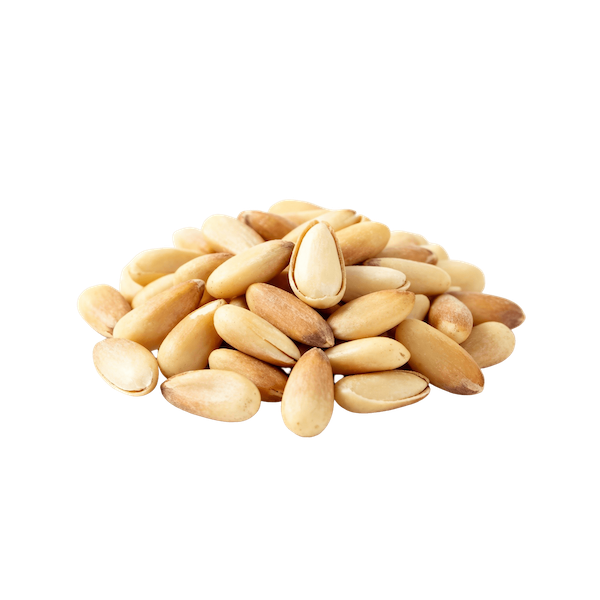
Pine Nuts (Pignoli), Dried

Pine Nuts (Pignoli), Dried

FamilyPinaceae
Importance
Dried pine nut is a concentrated seed from pine cones with a strong profile of unsaturated fats, plant protein, arginine, magnesium, phosphorus, zinc, copper, manganese, vitamin E compounds, phytosterols, and fiber. Its nutritional strength begins with fat quality. Pine nuts are rich in linoleic acid and oleic acid, and they also contain pinolenic acid, a distinctive pine nut fatty acid studied for appetite and metabolic signaling. These fats help form cell membranes, support lipid metabolism, and contribute to cardiovascular balance.

Pine nuts also support metabolic steadiness through their low available carbohydrate content, protein, fiber, and fat structure. Research on pine nut oil and pinolenic acid shows effects on gut hormones involved in satiety, including GLP-1 and cholecystokinin. These signals are connected with appetite control, digestive feedback, glucose handling, and post-meal metabolic regulation. Pine nuts are also rich in arginine, an amino acid used for nitric oxide production, which supports normal circulation and endothelial function.

The mineral profile of dried pine nut is especially important. Manganese, copper, magnesium, phosphorus, zinc, and iron participate in antioxidant defense, ATP metabolism, immune balance, oxygen handling, connective tissue support, and cellular repair. Manganese and copper help support antioxidant enzyme systems that defend cells from reactive oxygen stress. Magnesium supports energy-producing reactions and glucose-related pathways, while zinc supports immune signaling and tissue maintenance.

In cancer-supportive nutrition patterns, pine nut is most relevant for its antioxidant compounds, phytosterols, unsaturated fats, minerals, fiber, and amino acids. These nutrients intersect with Nrf2 antioxidant response, NF-kB inflammatory signaling balance, mitochondrial energy metabolism, lipid oxidation control, DNA protection, endothelial signaling, and gut microbial fermentation. Tocopherols, tocotrienols, squalene, phenolic acids, and phytosterols help protect lipids and cell membranes from oxidation while supporting a more balanced inflammatory environment.

Dried pine nuts are calorie dense, so their strongest role is as a small, concentrated whole-food source of minerals, healthy fats, and protein. Their low glycemic effect helps support steady post-meal energy. Pine nuts support cardiovascular function, metabolic balance, digestive signaling, immune resilience, cellular repair, and long-term antioxidant protection through their combined fatty acid profile, mineral cofactors, amino acids, and phytochemical content.

Region FoundPine nuts are harvested from edible-seeded pine species across the Mediterranean region, western North America, Siberia, China, Korea, Pakistan, Afghanistan, and other temperate pine forest regions
Glycemic Index15.0
Glycemic Load1.96
Helps Fight These Cancers: Colorectal Cancer, Stomach Cancer
Helps Fight These Ailments: Hypercholesterolemia, Hypertension, Prediabetes, Type 2 Diabetes, Metabolic Syndrome
Linked Hormones:
Linked Enzymes:
SUMMARY OF EFFECTS ON THE BODY
Immune System
Antioxidants (tocopherols, phenolics) modulate oxidative stress
Cardiovascular
PUFA/MUFA + minerals support healthy lipids and BP
Digestive System
Fiber → SCFA production
Skin & Collagen
Vitamin E supports membrane stability
Cellular Repair
Phenolics aid DNA-protection pathways

All values per 100g
Nutrition Facts
Calories (kcal)673
Protein (g)13.7
Carbohydrates (g)13.1
Fiber (g)3.7
Sugars (g)3.6
Total Fat (g)68.4
Saturated Fat (g)4.9
Vitamins
Vitamin A (µg RAE)1
Vitamin C (mg)0.82
Vitamin D (µg)0
Vitamin E (mg)9.29
Vitamin K (µg)54.64
Vitamin B1 / Thiamin (mg)0.357
Vitamin B2 / Riboflavin (mg)0.214
Vitamin B3 / Niacin (mg)4.286
Vitamin B5 / Pantothenic Acid (mg)0.321
Vitamin B6 (mg)0.107
Vitamin B7 / Biotin (µg)0
Folate B9 (µg)34.64
Vitamin B12 (µg)0
Vitamin Detail Pages
Minerals
Calcium (mg)16
Iron (mg)5.5
Magnesium (mg)254.64
Phosphorus (mg)575
Potassium (mg)597
Sodium (mg)2
Zinc (mg)6.43
Copper (mg)1.36
Manganese (mg)8.93
Selenium (µg)0.71
Iodine (µg)0
Mineral Detail Pages
Amino Acids
Alanine (mg)684 mg
Arginine (mg)2,413 mg
Asparagine (mg)0 mg
Aspartic Acid (mg)1,303 mg
Cysteine (mg)289 mg
Glutamic Acid (mg)2,926 mg
Glutamine (mg)0 mg
Glycine (mg)691 mg
Histidine (mg)341 mg
Isoleucine (mg)542 mg
Leucine (mg)991 mg
Lysine (mg)540 mg
Methionine (mg)259 mg
Phenylalanine (mg)524 mg
Proline (mg)673 mg
Serine (mg)835 mg
Threonine (mg)370 mg
Tryptophan (mg)107 mg
Tyrosine (mg)509 mg
Valine (mg)687 mg
Amino Acid Detail Pages
Phytochemicals
Pinolenic acid, oleic acid, linoleic acid, alpha-tocopherol, gamma-tocopherol, tocotrienols, beta-sitosterol, campesterol, stigmasterol, squalene, phenolic acids, flavonoids, phytosterols
Research & Notes
Research Notes:
USDA/MyFoodData “Dried Pine Nuts.” Macros for 100 g taken from page calculator; minerals/vitamins from 28 g panel scaled ×3.5714 to 100 g. GI (Blood Sugar Index) on page = 0. Amino acids scaled from 28 g to 100 g and mg→g. USDA reports cystine (≈0.293 g/100 g here); schema uses cysteine_g → keep cysteine_g=NULL and note cystine here.
Notes:
Use raw/dried or lightly toasted without added salt or oil.
Created: 2025-11-07 12:59:55
Last Updated: 2026-06-04 08:13:46