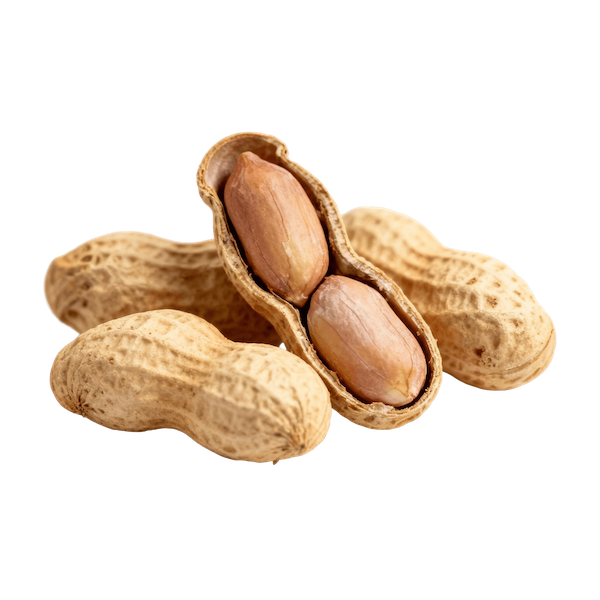
Peanut (Raw, Unroasted, Unsalted)

Peanut (Raw, Unroasted, Unsalted)

FamilyFabaceae
Importance
Raw peanut is a nutrient-dense legume commonly grouped with nuts because of its culinary use, fat profile, protein density, and concentrated mineral content. It provides plant protein, fiber, magnesium, phosphorus, potassium, zinc, copper, manganese, niacin, folate, vitamin E compounds, arginine, and unsaturated fats. Its strongest nutritional value comes from the combination of protein, low-glycemic carbohydrate, healthy fat, fiber, and polyphenols that support steady energy, cardiovascular balance, digestive function, and cellular repair.

Peanut is especially rich in arginine, an amino acid used to form nitric oxide, which supports blood vessel relaxation and circulation. Its magnesium supports ATP metabolism, glucose handling, nerve signaling, and muscle function. Copper, manganese, and zinc support antioxidant enzyme systems, immune balance, tissue repair, and protection from oxidative stress. These minerals connect peanut nutrition to mitochondrial energy production, redox balance, endothelial function, and inflammatory signaling pathways.

Peanuts have a low glycemic effect because their carbohydrate is balanced by protein, fat, and fiber. Clinical research shows that peanuts can reduce post-meal glucose response and influence insulin-related markers, making them relevant to insulin signaling, carbohydrate metabolism, and appetite-regulating pathways. Peanut proteins and derived peptides have also been studied for alpha-amylase and alpha-glucosidase inhibition, connecting peanuts to starch digestion and post-meal glucose control.

The phytochemical profile of peanuts includes resveratrol, p-coumaric acid, ferulic acid, caffeic acid, catechin, epicatechin, phytosterols, tocopherols, and other phenolic compounds. These compounds support antioxidant defense, lipid protection, inflammatory balance, and cellular stress response. In cancer-supportive nutrition patterns, peanut is most relevant for its polyphenols, vitamin E activity, arginine, fiber, minerals, and unsaturated fats. These nutrients intersect with Nrf2 antioxidant response, NF-kB inflammatory signaling balance, lipid metabolism, mitochondrial resilience, DNA protection, nitric oxide biology, and gut microbial fermentation.

Raw peanut is calorie dense, so its best use is as a concentrated whole-food source of protein, minerals, fiber, and protective plant compounds in reasonable portions. Its nutrient pattern supports cardiovascular function, metabolic steadiness, digestive resilience, immune balance, nervous system function, and long-term cellular maintenance.

Region FoundNative to South America; now widely cultivated in the United States, China, India, Africa, Southeast Asia, and other warm regions
Glycemic Index14.0
Glycemic Load2.26
Helps Fight These Cancers: Colorectal Cancer, Stomach Cancer
Helps Fight These Ailments: Type 2 Diabetes, Prediabetes, Hypercholesterolemia, Hypertension, Metabolic Syndrome
Linked Hormones:
SUMMARY OF EFFECTS ON THE BODY
Immune System
Phenolics & vitamin E support antioxidant defenses
Cardiovascular
MUFA/PUFA + fiber support lipids and endothelial function
Digestive System
Fiber → SCFA production & gut barrier
Skin & Collagen
Vitamin E supports membrane stability
Cellular Repair
Folate/niacin & polyphenols support DNA-protection pathways

All values per 100g
Nutrition Facts
Calories (kcal)567
Protein (g)25.8
Carbohydrates (g)16.1
Fiber (g)8.5
Sugars (g)4.7
Total Fat (g)49.2
Saturated Fat (g)6.3
Vitamins
Vitamin A (µg RAE)0
Vitamin C (mg)0
Vitamin D (µg)0
Vitamin E (mg)8.57
Vitamin K (µg)0
Vitamin B1 / Thiamin (mg)0.64
Vitamin B2 / Riboflavin (mg)0.14
Vitamin B3 / Niacin (mg)12.14
Vitamin B5 / Pantothenic Acid (mg)1.79
Vitamin B6 (mg)0.36
Vitamin B7 / Biotin (µg)0
Folate B9 (µg)243.6
Vitamin B12 (µg)0
Vitamin Detail Pages
Minerals
Calcium (mg)92
Iron (mg)4.6
Magnesium (mg)168
Phosphorus (mg)376
Potassium (mg)705
Sodium (mg)18
Zinc (mg)3.27
Copper (mg)1.144
Manganese (mg)1.934
Selenium (µg)7.2
Iodine (µg)0
Mineral Detail Pages
Amino Acids
Alanine (mg)1,025 mg
Arginine (mg)3,085 mg
Asparagine (mg)0 mg
Aspartic Acid (mg)3,146 mg
Cysteine (mg)331 mg
Glutamic Acid (mg)5,390 mg
Glutamine (mg)0 mg
Glycine (mg)1,554 mg
Histidine (mg)652 mg
Isoleucine (mg)907 mg
Leucine (mg)1,672 mg
Lysine (mg)926 mg
Methionine (mg)317 mg
Phenylalanine (mg)1,337 mg
Proline (mg)1,138 mg
Serine (mg)1,271 mg
Threonine (mg)883 mg
Tryptophan (mg)250 mg
Tyrosine (mg)1,049 mg
Valine (mg)1,082 mg
Amino Acid Detail Pages
Phytochemicals
Resveratrol, p-coumaric acid, ferulic acid, caffeic acid, catechin, epicatechin, quercetin derivatives, phytosterols, beta-sitosterol, campesterol, stigmasterol, alpha-tocopherol, gamma-tocopherol, phenolic acids, flavonoids
Research & Notes
Research Notes:
USDA/MyFoodData “Raw Peanuts.” Macros & major minerals from the 100 g calculator; vitamins and AA panel scaled from the 28 g facts (×3.5714) with amino acids converted mg→g. Blood Sugar Index (GI)=0. USDA lists cystine ≈0.336 g/100 g; schema has cysteine_g → keep cysteine_g=NULL and note cystine here.
Notes:
Use raw or dry-roasted without added salt; common allergen; portion-dense.
Created: 2025-11-07 13:07:20
Last Updated: 2026-06-04 08:13:46