Importance
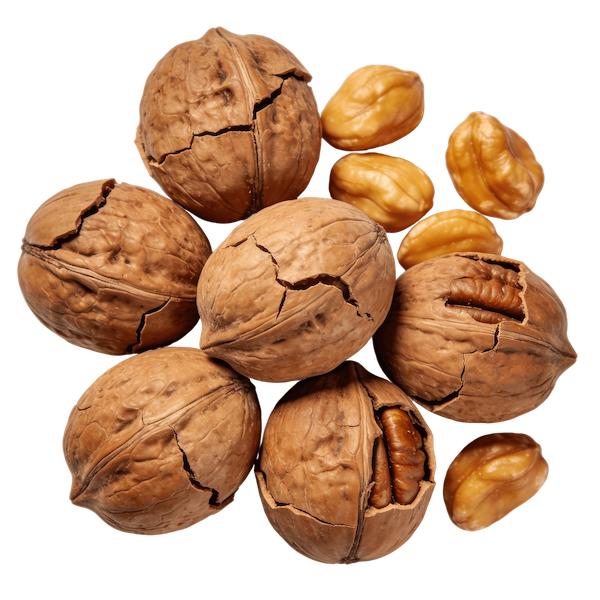
Raw shagbark hickory nut is a rich native North American tree nut with a dense nutrient pattern built around healthy fats, plant protein, fiber, phosphorus, magnesium, potassium, vitamin E activity, and naturally occurring phenolic compounds. Its strongest nutritional identity is energy density from fat, with a buttery profile similar to pecan because shagbark hickory is closely related within the Carya genus. The fat fraction is expected to be dominated by unsaturated fatty acids, especially oleic and linoleic acids, which support cell membrane structure, lipid metabolism, bile acid movement, and cardiovascular balance.
Shagbark hickory nut supports cellular health through antioxidant and mineral-based pathways. Vitamin E compounds help protect cell membranes from lipid oxidation, while phenolic acids, flavonoids, tannins, and related polyphenols support oxidative stress control and inflammatory signaling balance. These compounds connect the nut to Nrf2 antioxidant response, NF-kB inflammatory regulation, mitochondrial stability, lipid oxidation defense, and DNA protection. These pathways matter because oxidative stress and chronic inflammatory signaling can place pressure on DNA, cell membranes, blood vessels, and immune communication.
The mineral profile of hickory nuts supports enzyme-driven repair systems throughout the body. Magnesium supports ATP metabolism, muscle and nerve signaling, and glucose-handling pathways. Phosphorus contributes to ATP, cell membranes, and bone structure. Potassium supports fluid balance and normal electrical signaling. Vitamin E and phenolic compounds help reduce oxidative burden on lipids and tissues, while fiber supports digestive balance and microbial fermentation. This links shagbark hickory nut to gut barrier support, short-chain fatty acid production, immune signaling, and colon health.
In cancer-supportive nutrition patterns, shagbark hickory nut is most relevant for its unsaturated fats, antioxidant compounds, vitamin E activity, fiber, minerals, and Carya-family polyphenols. These nutrients help maintain a healthier cellular environment through redox balance, inflammatory regulation, membrane protection, and normal repair signaling. The nut also provides plant protein and amino acid building blocks, but complete public amino-acid datasets for raw shagbark hickory nut are not standardized enough to assign reliable per-100 g values without borrowing from pecan or another related nut.
Raw shagbark hickory nut is calorie dense, so its best role is as a small, concentrated whole-food source of fats, minerals, antioxidants, and fiber. Its low available carbohydrate content gives it a very low expected glycemic effect. It supports cardiovascular function, cellular protection, digestive resilience, metabolic steadiness, and long-term repair pathways through its combined fat quality, mineral density, fiber, and phytochemical profile.