Importance
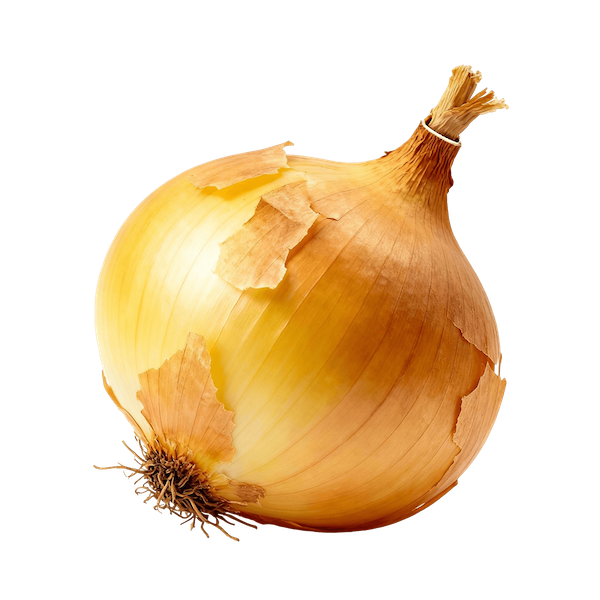
Yellow onion is the mature bulb of Allium cepa, valued for its sweet pungent flavor, culinary depth, vitamin C, vitamin B6, folate, potassium, manganese, fiber, fructans, flavonoids, and Allium-family organosulfur compounds. Per 100 g, raw yellow onion provides about 40 calories, 9.3 g carbohydrate, 1.7 g fiber, 1.1 g protein, and very little fat. Its layered bulb stores water, natural sugars, fructan-type fibers, minerals, amino acids, sulfur compounds, and phenolic antioxidants. When cut or crushed, onion enzymes convert sulfur precursors into pungent volatile compounds that give onion its aroma and biological activity.
Yellow onion supports everyday nourishment through fiber, vitamin C, vitamin B6, folate, potassium, manganese, and sulfur chemistry. Fiber supports digestive movement, stool bulk, microbial fermentation, and short-chain fatty acid production. Vitamin C contributes to collagen formation, antioxidant recycling, immune barrier function, and connective tissue maintenance. Vitamin B6 supports amino acid metabolism and neurotransmitter-related enzyme systems. Folate participates in one-carbon metabolism, DNA synthesis, and normal cell division. Potassium supports fluid balance, nerve signaling, and muscle contraction, while manganese supports carbohydrate metabolism and antioxidant enzyme activity.
For cancer and ailment-support nutrition, yellow onion is relevant because Allium cepa contains quercetin, quercetin glucosides, kaempferol derivatives, organosulfur compounds, thiosulfinates, S-alkenyl cysteine sulfoxides, fructans, saponins, phenolic acids, selenium traces, vitamin C, and fiber. These compounds connect to Nrf2-related antioxidant response, NF-kB inflammatory signaling balance, glutathione-related redox balance, phase II detoxification enzyme signaling, AMPK-linked metabolic regulation, insulin-related carbohydrate handling, endothelial nitric oxide signaling, apoptosis-related cell signaling, gut fermentation pathways, short-chain fatty acid production, and cellular repair pathways. Yellow onion contributes Allium sulfur chemistry, fermentable fiber, flavonoids, minerals, vitamin C, and antioxidant cofactors tied to digestive function, vascular support, inflammatory signaling balance, detoxification-enzyme activity, cellular repair, antioxidant defense, and normal metabolic regulation.
Yellow onion pairs well with garlic, leeks, mushrooms, tomatoes, potatoes, carrots, cabbage, kale, lentils, beans, chickpeas, brown rice, quinoa, barley, parsley, thyme, rosemary, turmeric, ginger, walnuts, almonds, and pumpkin seeds. Its strongest nutritional identity is the combination of layered bulb structure, fructan fiber, quercetin, organosulfur compounds, vitamin C, vitamin B6, potassium, manganese, and Allium-family phytochemicals connected to antioxidant, digestive, vascular, metabolic, inflammatory, detoxification-enzyme, and cellular support pathways.