Importance
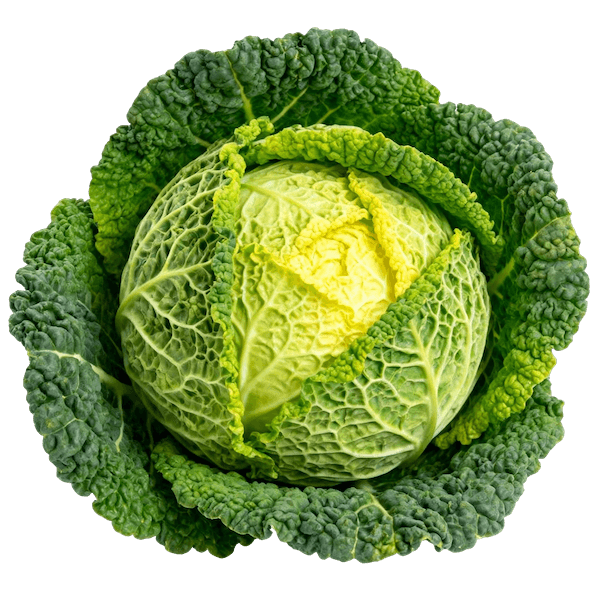
Savoy cabbage is a crinkled-leaf cruciferous vegetable with a strong nutritional identity built around vitamin C, vitamin K, folate, fiber, potassium, glucosinolates, phenolic compounds, chlorophyll, and sulfur-containing plant chemistry. Per 100 g, raw savoy cabbage is low in calories, low in fat, naturally low in sugar, and useful for adding mineral support, hydration, digestive bulk, and Brassica-family phytochemicals to meals. Its textured green leaves provide a different culinary profile than smooth cabbage while sharing the same cruciferous pathways that support antioxidant defense, epithelial strength, gut function, and cellular repair.
Savoy cabbage supports cancer-focused nutrition through glucosinolate metabolism, vitamin C activity, fiber fermentation, and antioxidant signaling. Glucosinolates can be hydrolyzed by myrosinase into isothiocyanates and indole compounds when the leaves are chopped or chewed. These compounds are studied for their relationship to Nrf2-related antioxidant response, phase II detoxification enzyme signaling, inflammatory balance, and cellular stress regulation. Vitamin C supports collagen formation, immune cell activity, epithelial tissue integrity, and antioxidant recycling. Vitamin K contributes to vitamin K-dependent protein activation, while folate supports one-carbon metabolism, methylation reactions, DNA synthesis, and normal cell renewal.
For ailments, savoy cabbage is most relevant where oxidative stress, poor fiber intake, sluggish digestion, vascular strain, low folate intake, or unstable post-meal glucose patterns are part of the pattern. Its very low calorie density and fiber content help support fullness and bowel regularity. The carbohydrate level is modest, and the glycemic load is low in normal portions. Cabbage-family extracts have been studied for inhibition of alpha-amylase and alpha-glucosidase, two enzymes that break carbohydrates into absorbable sugars. This supports a connection between savoy cabbage and insulin-related glucose handling because slower carbohydrate digestion can influence post-meal glucose and insulin demand.
The strongest pathways for savoy cabbage include glucosinolate hydrolysis, myrosinase activity, isothiocyanate formation, Nrf2 antioxidant signaling, phase II enzyme support, carbohydrate digestion, insulin-related metabolic response, folate-dependent one-carbon metabolism, vitamin K-dependent protein activation, and gut microbial fermentation from fiber. Savoy cabbage is best used as a whole cruciferous leaf vegetable that adds vitamin C, vitamin K, folate, fiber, potassium, sulfur chemistry, and protective phytochemicals to meals. Its value comes from combining leafy vegetable lightness with Brassica-family cellular defense pathways, making it useful for digestive balance, vascular support, immune resilience, and long-term cellular protection.