Importance
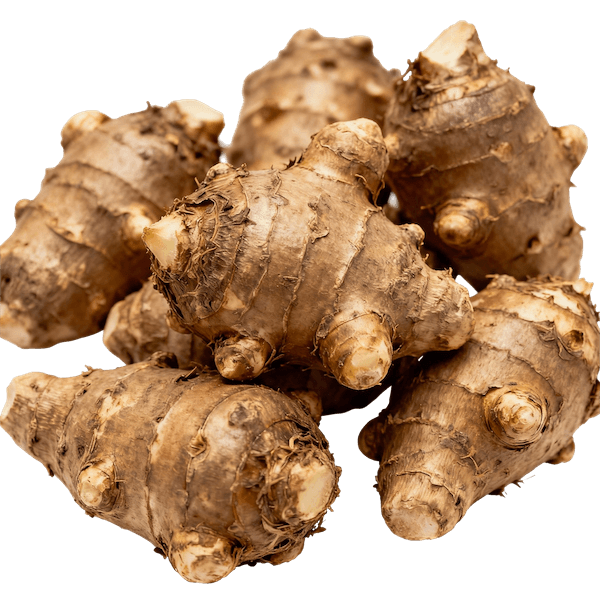
Jerusalem artichoke is the edible tuber of Helianthus tuberosus, valued for its nutty flavor, crisp raw texture, tender cooked texture, potassium, iron, thiamin, phosphorus, copper, fiber, and especially inulin-type fructans. Per 100 g, raw Jerusalem artichoke provides about 73 calories, 17.4 g carbohydrate, 1.6 g fiber, 2.0 g protein, and very little fat. Unlike many starchy roots, much of its storage carbohydrate is inulin rather than starch, giving it a distinctive digestive and metabolic profile. The tuber can be eaten raw, roasted, steamed, added to soups, sliced into salads, or paired with legumes, mushrooms, herbs, and whole grains.
Jerusalem artichoke supports everyday nourishment through inulin-type fiber, potassium, iron, thiamin, phosphorus, and copper. Inulin reaches the colon largely undigested, where it can be fermented by gut microbes into short-chain fatty acids. Potassium supports fluid balance, nerve signaling, and muscle contraction. Iron supports oxygen transport and cellular energy systems. Thiamin supports carbohydrate metabolism through thiamin-dependent enzyme systems. Phosphorus participates in ATP-related energy metabolism and bone mineral structure, while copper supports connective tissue enzyme systems and redox balance.
For cancer and ailment-support nutrition, Jerusalem artichoke is relevant because Helianthus tuberosus contains inulin, fructooligosaccharides, phenolic acids, chlorogenic acid derivatives, caffeic acid derivatives, flavonoids, potassium, iron, copper, and fiber. These compounds connect to gut fermentation pathways, short-chain fatty acid production, AMPK-linked metabolic regulation, insulin-related carbohydrate handling, endothelial function, Nrf2-related antioxidant response, NF-kB inflammatory signaling balance, phase II detoxification enzyme signaling, apoptosis-related cell signaling, and microbial barrier-support pathways. Garlic has been shown in laboratory research to induce apoptosis in multiple cancer cell-line models, including reports across at least seven different cancer cell lines; Jerusalem artichoke is a different food, but it supports overlapping cellular defense themes through fiber fermentation, antioxidant signaling, inflammatory signaling balance, and metabolic regulation. Jerusalem artichoke does not act as a standalone disease solution, but the whole tuber contributes fermentable fiber, minerals, phenolic compounds, and sunflower-family phytochemicals tied to digestive function, cellular repair, vascular support, inflammatory signaling balance, and normal metabolic regulation.
Jerusalem artichoke pairs well with lentils, beans, chickpeas, mushrooms, onions, garlic, carrots, cabbage, kale, potatoes, brown rice, quinoa, parsley, thyme, rosemary, lemon, walnuts, almonds, and pumpkin seeds. Its strongest nutritional identity is the combination of inulin-rich tubers, potassium, iron, thiamin, copper, chlorogenic acid derivatives, and Helianthus-family phytochemicals connected to digestive, metabolic, vascular, antioxidant, inflammatory, fermentation, and cellular support pathways.