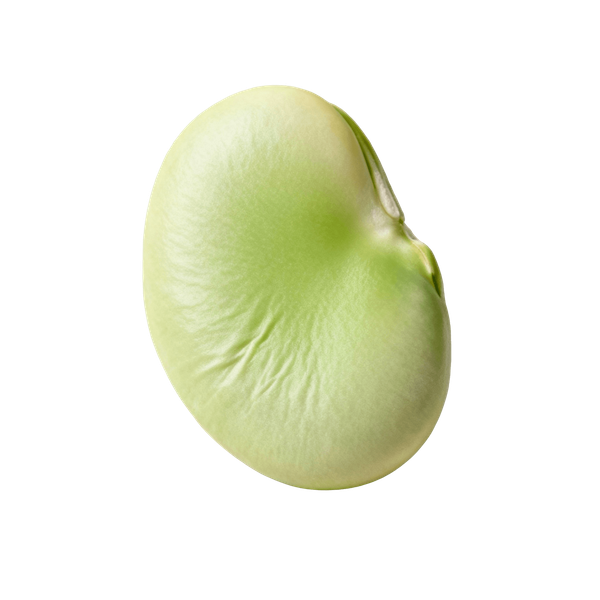
Vegetable Detail

Lima Beans (Butter Beans, raw)

Lima Beans (Butter Beans, raw)

FamilyFabaceae
Importance
Lima beans are the mature seeds of Phaseolus lunatus, valued for their creamy texture, plant protein, resistant starch, fiber, folate, potassium, magnesium, iron, manganese, copper, phosphorus, and legume-family phytochemicals. Per 100 g, cooked lima beans provide about 115 calories, 20.9 g carbohydrate, 7.0 g fiber, 7.8 g protein, and very little fat. Their carbohydrate occurs within a whole bean matrix that includes starch, soluble fiber, insoluble fiber, amino acids, minerals, B vitamins, and phenolic compounds. This combination makes lima beans a dense legume food rather than a watery vegetable.

Lima beans support everyday nourishment through protein, fiber, folate, potassium, magnesium, iron, manganese, and copper. Protein supplies amino acids used for tissue maintenance, enzyme structure, immune proteins, and normal cellular repair. Fiber supports digestive movement, stool bulk, microbial fermentation, and short-chain fatty acid production. Folate participates in one-carbon metabolism, DNA synthesis, and normal cell division. Potassium supports fluid balance, nerve signaling, and muscle contraction. Magnesium participates in ATP-related energy metabolism, while iron and copper support oxygen transport and redox enzyme systems.

For cancer and ailment-support nutrition, lima beans are relevant because Phaseolus lunatus contains resistant starch, soluble fiber, insoluble fiber, phenolic acids, flavonoids, saponins, phytosterols, folate, magnesium, potassium, manganese, copper, and plant protein. These compounds connect to gut fermentation pathways, short-chain fatty acid production, AMPK-linked metabolic regulation, insulin-related carbohydrate handling, one-carbon metabolism, endothelial function, Nrf2-related antioxidant response, NF-kB inflammatory signaling balance, phase II detoxification enzyme signaling, apoptosis-related cell signaling, and cellular repair pathways. Lima beans contribute steady legume energy, digestive fiber, amino acids, folate, minerals, resistant starch, and phenolic compounds tied to metabolic regulation, digestive function, vascular support, inflammatory signaling balance, antioxidant defense, and normal cellular maintenance.

Lima beans pair well with tomatoes, onions, garlic, mushrooms, carrots, celery, cabbage, kale, collard greens, brown rice, quinoa, barley, potatoes, corn, parsley, thyme, rosemary, lemon, pumpkin seeds, walnuts, and almonds. Their strongest nutritional identity is the combination of creamy legumes, protein, resistant starch, fiber, folate, magnesium, potassium, manganese, copper, saponins, and Phaseolus-family phytochemicals connected to digestive, metabolic, vascular, antioxidant, inflammatory, fermentation, and cellular support pathways.

Region FoundLima beans Phaseolus lunatus originated in the Americas, with domestication centers in Mesoamerica and the Andean region, and are now cultivated in warm-season legume systems worldwide. Major growing regions include Peru, Mexico, the United States, Brazil, parts of the Caribbean, Africa, India, and other tropical or subtropical regions with warm temperatures, full sun, fertile well-drained soils, and steady moisture.
Glycemic Index32.0
Glycemic Load4.45
Helps Fight These Cancers: Colon, Breast, Stomach
Helps Fight These Ailments: High Fiber And Plant Proteins Support Scfa Formation And Antioxidant Enzymes, Contains Phenolics And Saponins With Antiproliferative Properties.

All values per 100g
Nutrition Facts
Calories (kcal)338
Protein (g)21.5
Carbohydrates (g)63.4
Fiber (g)19
Sugars (g)8.5
Total Fat (g)0.69
Saturated Fat (g)0
Vitamins
Vitamin A (µg RAE)0
Vitamin C (mg)0
Vitamin D (µg)0
Vitamin E (mg)0.72
Vitamin K (µg)2.8
Vitamin B1 / Thiamin (mg)0.502
Vitamin B2 / Riboflavin (mg)0.147
Vitamin B3 / Niacin (mg)1.537
Vitamin B5 / Pantothenic Acid (mg)1.29
Vitamin B6 (mg)0.512
Vitamin B7 / Biotin (µg)0
Folate B9 (µg)395
Vitamin B12 (µg)0
Vitamin Detail Pages
Minerals
Calcium (mg)81
Iron (mg)7.51
Magnesium (mg)224
Phosphorus (mg)385
Potassium (mg)1720
Sodium (mg)18
Zinc (mg)3.14
Copper (mg)0.76
Manganese (mg)2.03
Selenium (µg)10
Iodine (µg)0
Mineral Detail Pages
Amino Acids
Alanine (mg)327 mg
Arginine (mg)540 mg
Asparagine (mg)0 mg
Aspartic Acid (mg)879 mg
Cysteine (mg)75 mg
Glutamic Acid (mg)1,214 mg
Glutamine (mg)0 mg
Glycine (mg)308 mg
Histidine (mg)194 mg
Isoleucine (mg)330 mg
Leucine (mg)579 mg
Lysine (mg)541 mg
Methionine (mg)77 mg
Phenylalanine (mg)391 mg
Proline (mg)312 mg
Serine (mg)382 mg
Threonine (mg)301 mg
Tryptophan (mg)66 mg
Tyrosine (mg)254 mg
Valine (mg)402 mg
Amino Acid Detail Pages
Phytochemicals
Resistant starch, soluble fiber, insoluble fiber, phenolic acids, ferulic acid derivatives, caffeic acid derivatives, p-coumaric acid derivatives, flavonoids, quercetin derivatives, kaempferol derivatives, saponins, phytosterols, phytic acid, folate, potassium, magnesium, manganese, iron, copper, phosphorus, zinc, and Phaseolus lunatus bioactive compounds. Research references: Hayat I, Ahmad A, Masud T, Ahmed A, Bashir S. Nutritional and health perspectives of beans Phaseolus vulgaris L.: an overview. Critical Reviews in Food Science and Nutrition. 2014. Rochfort S, Panozzo J. Phytochemicals for health, the role of pulses. Journal of Agricultural and Food Chemistry. 2007. Campos-Vega R, Loarca-Piña G, Oomah BD. Minor components of pulses and their potential impact on human health. Food Research International. 2010.
Research & Notes
Research Notes:
USDA FDC per 100 g raw lima beans (Phaseolus lunatus). Biotin, iodine, asparagine, and glutamine not reported → NULL.
Notes:
Raw 100 g baseline (shelled).
Created: 2025-10-23 18:28:09
Last Updated: 2026-06-04 08:13:13