Importance
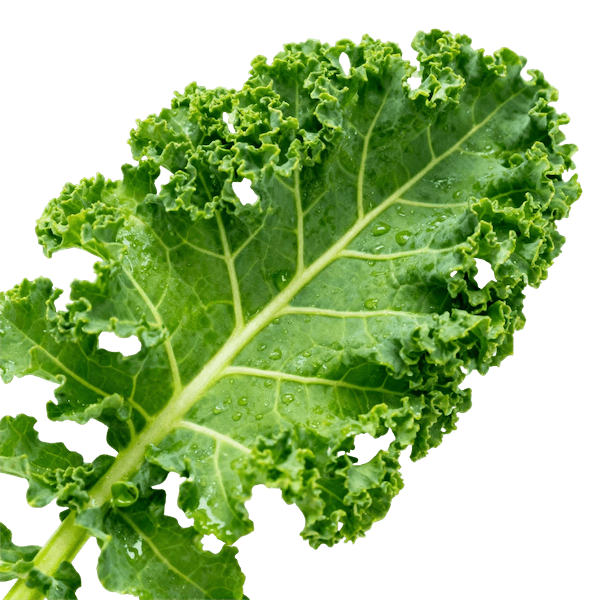
Kale is a dark leafy cruciferous vegetable from Brassica oleracea, valued for its dense green leaves, vitamin K, vitamin C, vitamin A carotenoid activity, folate, calcium, potassium, magnesium, fiber, chlorophyll, carotenoids, glucosinolates, and sulfur-containing Brassica phytochemicals. Per 100 g, raw kale provides about 35 calories, 4.4 g carbohydrate, 4.1 g fiber, 2.9 g protein, and very little fat. Its deep green color reflects chlorophyll, lutein, zeaxanthin, beta-carotene, and other pigments concentrated in the leaf tissue.
Kale supports everyday nourishment through vitamin K, vitamin C, folate, calcium, potassium, magnesium, and fiber. Vitamin K supports normal blood-clotting protein activation and bone-related protein function. Vitamin C contributes to collagen formation, antioxidant recycling, immune barrier function, and connective tissue maintenance. Folate participates in one-carbon metabolism, DNA synthesis, and normal cell division. Calcium and magnesium support bone mineral structure, nerve signaling, muscle function, and enzyme activity. Fiber supports digestive movement, stool bulk, microbial fermentation, and short-chain fatty acid production.
For cancer and ailment-support nutrition, kale is important because Brassica greens contain glucosinolates, glucobrassicin, sinigrin-related compounds, glucoraphanin-related compounds, isothiocyanates, sulforaphane-related compounds, indole-3-carbinol-related compounds, chlorophylls, beta-carotene, lutein, zeaxanthin, quercetin derivatives, kaempferol derivatives, vitamin C, folate, calcium, and fiber. These compounds connect to Nrf2-related antioxidant response, NF-kB inflammatory signaling balance, glutathione-related redox balance, phase II detoxification enzyme signaling, one-carbon metabolism, endothelial function, AMPK-linked metabolic regulation, insulin-related carbohydrate handling, apoptosis-related cell signaling, and gut fermentation pathways supported by fiber. Kale contributes antioxidant pigments, digestive fiber, folate, minerals, green chlorophyll, and sulfur-related cruciferous compounds tied to cellular repair, inflammatory signaling balance, vascular support, digestive function, detoxification-enzyme activity, and normal metabolic regulation.
Kale pairs well with beans, lentils, chickpeas, mushrooms, onions, garlic, tomatoes, carrots, potatoes, brown rice, quinoa, millet, citrus, apples, parsley, dill, basil, walnuts, almonds, and pumpkin seeds. Its strongest nutritional identity is the combination of dark leafy structure, vitamin K, vitamin C, calcium, folate, fiber, glucosinolates, chlorophyll, lutein, zeaxanthin, beta-carotene, and Brassica-family phytochemicals connected to antioxidant, digestive, vascular, metabolic, inflammatory, detoxification-enzyme, and cellular defense pathways.