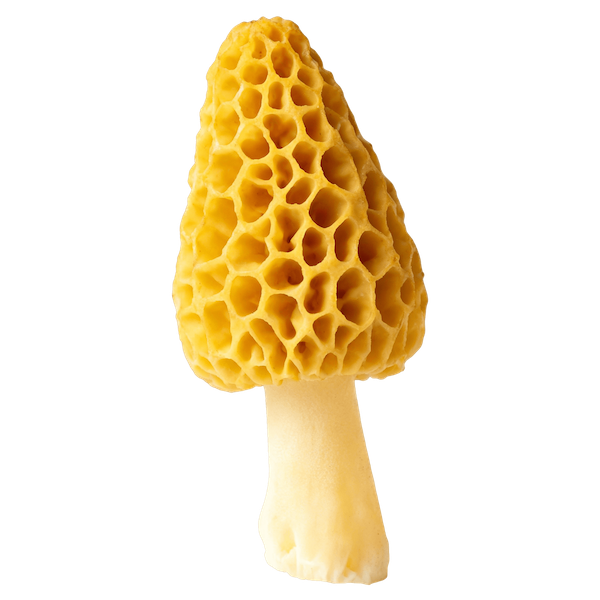
Vegetable Detail

Morel Mushroom

Morel Mushroom

FamilyMorchellaceae
Importance
Morel mushroom is the honeycomb-capped edible fungus from Morchella species, valued for its deep earthy flavor, firm texture, protein, fiber, iron, copper, manganese, phosphorus, potassium, vitamin D potential after light exposure, B vitamins, and mushroom-specific bioactive compounds. Per 100 g, raw morel mushrooms provide about 31 calories, 5.1 g carbohydrate, 2.8 g fiber, 3.1 g protein, and very little fat. Their structure differs from plant vegetables because mushrooms contain chitin-rich fungal cell walls, beta-glucan-type polysaccharides, amino acids, ergosterol, minerals, and antioxidant-active compounds.

Morel mushrooms support everyday nourishment through protein, fiber, copper, iron, manganese, phosphorus, potassium, niacin, riboflavin, and fungal metabolites. Protein supplies amino acids used for tissue maintenance, enzyme structure, immune proteins, and normal cellular repair. Fiber and chitin-containing cell-wall materials support digestive bulk and microbial fermentation. Copper supports iron handling, connective tissue enzyme systems, and redox balance. Iron supports oxygen transport and cellular energy systems. Manganese participates in carbohydrate metabolism, connective tissue formation, and antioxidant enzyme activity. Phosphorus supports ATP-related energy metabolism and bone mineral structure.

For cancer and ailment-support nutrition, morel mushrooms are relevant because Morchella species contain beta-glucan-type polysaccharides, chitin, ergosterol, ergothioneine-related antioxidant activity, phenolic compounds, flavonoid-like compounds, amino acids, copper, iron, manganese, and other mineral cofactors. These compounds connect to Nrf2-related antioxidant response, glutathione-related redox balance, NF-kB inflammatory signaling balance, AMPK-linked metabolic regulation, insulin-related carbohydrate handling, immune signaling, endothelial function, phase II detoxification enzyme signaling, apoptosis-related cell signaling, gut fermentation pathways, and cellular repair pathways. Morel mushrooms contribute fungal fiber, protein, minerals, antioxidant metabolites, polysaccharides, and Morchella-family compounds tied to digestive function, immune communication, vascular support, inflammatory signaling balance, antioxidant defense, and normal cellular maintenance.

Morel mushrooms pair well with lentils, beans, chickpeas, onions, garlic, leeks, potatoes, carrots, cabbage, kale, brown rice, barley, quinoa, parsley, thyme, rosemary, walnuts, almonds, and pumpkin seeds. Their strongest nutritional identity is the combination of wild mushroom flavor, chitin-rich fiber, protein, copper, iron, manganese, phosphorus, ergosterol, beta-glucan-type polysaccharides, and Morchella bioactive compounds connected to digestive, immune, vascular, metabolic, antioxidant, inflammatory, and cellular support pathways.

Region FoundMorel mushrooms Morchella species grow in temperate forests, disturbed soils, burn areas, orchards, and woodland edges across North America, Europe, and Asia. They are especially associated with spring conditions, moist soils, hardwood forests, conifer forests, and post-fire habitats. Commercial cultivation exists but wild harvesting remains important in many regions.
Helps Fight These Cancers: Breast, Colon, Lung
Helps Fight These Ailments: Contains Polysaccharides And Phenolic Compounds With Antioxidant And Immune Supportive Effects, Morel Extracts Studied For Tumor Inhibition And Liver Protection.
Linked Hormones:

All values per 100g
Nutrition Facts
Calories (kcal)31
Protein (g)3.12
Carbohydrates (g)5.1
Fiber (g)2.8
Sugars (g)0.6
Total Fat (g)0.57
Saturated Fat (g)0
Vitamins
Vitamin A (µg RAE)0
Vitamin C (mg)2.1
Vitamin D (µg)0.2
Vitamin E (mg)0.01
Vitamin K (µg)0
Vitamin B1 / Thiamin (mg)0.05
Vitamin B2 / Riboflavin (mg)0.31
Vitamin B3 / Niacin (mg)2.252
Vitamin B5 / Pantothenic Acid (mg)1
Vitamin B6 (mg)0.2
Vitamin B7 / Biotin (µg)0
Folate B9 (µg)18
Vitamin B12 (µg)0
Vitamin Detail Pages
Minerals
Calcium (mg)43
Iron (mg)12.18
Magnesium (mg)19
Phosphorus (mg)194
Potassium (mg)411
Sodium (mg)21
Zinc (mg)0.63
Copper (mg)0.31
Manganese (mg)0.175
Selenium (µg)9
Iodine (µg)0
Mineral Detail Pages
Amino Acids
Alanine (mg)199 mg
Arginine (mg)118 mg
Asparagine (mg)0 mg
Aspartic Acid (mg)195 mg
Cysteine (mg)12 mg
Glutamic Acid (mg)343 mg
Glutamine (mg)0 mg
Glycine (mg)92 mg
Histidine (mg)57 mg
Isoleucine (mg)76 mg
Leucine (mg)120 mg
Lysine (mg)107 mg
Methionine (mg)29 mg
Phenylalanine (mg)76 mg
Proline (mg)76 mg
Serine (mg)96 mg
Threonine (mg)107 mg
Tryptophan (mg)35 mg
Tyrosine (mg)44 mg
Valine (mg)152 mg
Amino Acid Detail Pages
Phytochemicals
Beta-glucan-type polysaccharides, chitin, ergosterol, phenolic compounds, flavonoid-like compounds, ergothioneine-related antioxidant activity, glutathione-related antioxidant activity, copper, iron, manganese, phosphorus, potassium, niacin, riboflavin, vitamin D2 potential after ultraviolet exposure, fiber, and Morchella species bioactive compounds. Research references: Nitha B, Meera CR, Janardhanan KK. Anti-inflammatory and antitumour activities of cultured mycelium of morel mushroom Morchella esculenta. Current Science. 2007. Heleno SA, Barros L, Martins A, Queiroz MJRP, Santos-Buelga C, Ferreira ICFR. Phenolic, polysaccharidic, and lipidic fractions of mushrooms from northeastern Portugal. Food Chemistry. 2012. Kalaras MD, Richie JP, Calcagnotto A, Beelman RB. Mushrooms: A rich source of the antioxidants ergothioneine and glutathione. Food Chemistry. 2017.
Research & Notes
Research Notes:
USDA and peer-reviewed data per 100 g raw Morchella esculenta; amino acids normalized to 3.12 g protein/100 g. Biotin, iodine, asparagine, and glutamine not reported → NULL.
Notes:
Raw 100 g baseline; wild-harvested morels.
Created: 2025-10-23 18:52:39
Last Updated: 2026-06-04 08:13:13