Importance
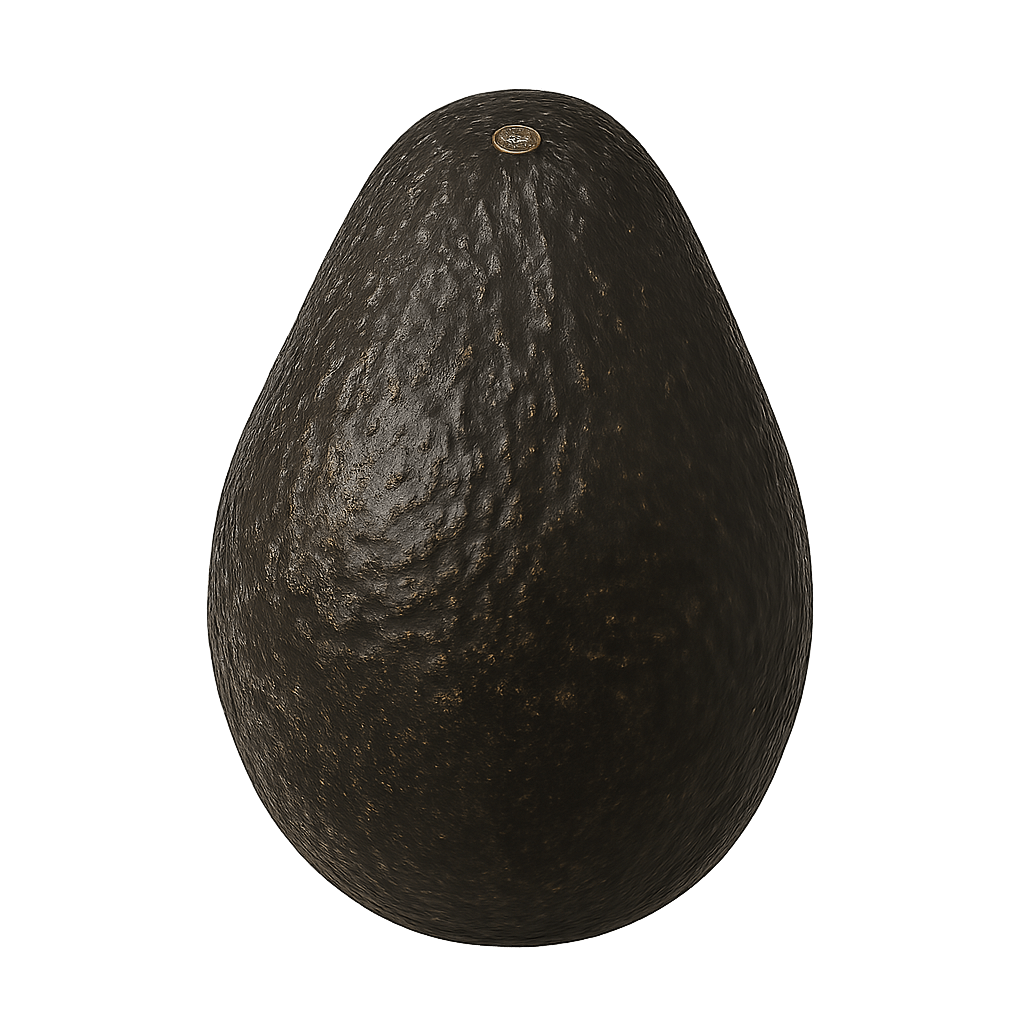
Hass avocado is a nutrient-dense fruit derived from Persea americana and is distinguished from most fruits by its high monounsaturated fat content, low sugar concentration, substantial fiber, potassium richness, and broad micronutrient profile. Unlike sweet fruits that primarily provide carbohydrate energy, Hass avocado contributes a unique combination of oleic acid, carotenoids, phytosterols, fiber, magnesium, folate, vitamin K, vitamin E, and multiple antioxidant compounds. The fruit is most commonly consumed raw and retains its nutritional structure when minimally processed.
The lipid composition of Hass avocado is dominated by monounsaturated fatty acids, especially oleic acid, which is also found in olives. These fats contribute to membrane structure, lipid transport balance, satiety, and absorption of fat-soluble compounds. Avocado additionally contains carotenoids such as lutein, zeaxanthin, beta-carotene, and violaxanthin, along with glutathione-supportive compounds and phenolic antioxidants. The fat matrix enhances absorption of carotenoid compounds from surrounding vegetables and plant foods when eaten together in mixed meals.
Hass avocado is also notable for its fiber composition. Both soluble and insoluble fibers contribute to digestive support, stool bulk, microbial fermentation, and glycemic moderation. The fruit’s low sugar profile combined with substantial fiber gives it a very low glycemic load despite moderate caloric density. This makes it metabolically distinct from highly refined carbohydrate foods or sweetened spreads. Potassium and magnesium contribute to fluid balance, neuromuscular regulation, and vascular function.
From a pathway perspective, Hass avocado is closely associated with endothelial support, lipid metabolism balance, glutathione activity, antioxidant defense, epithelial resilience, and inflammatory signaling modulation. Oleic acid and carotenoids are frequently studied in relation to membrane integrity, oxidative stress balance, and cellular signaling. The fruit also contributes phytosterols including beta-sitosterol, which participate in cholesterol transport dynamics within the digestive tract.
The creamy texture and neutral flavor profile of Hass avocado make it highly versatile in whole-food dietary patterns. It combines effectively with legumes, tomatoes, citrus, leafy greens, cruciferous vegetables, herbs, whole grains, and seeds. The fruit can also improve satiety in meals without relying on refined oils or processed fats. Because the edible pulp is naturally low in sodium and sugar while being rich in potassium and fiber, it supports balanced mineral intake and hydration-related physiology.
Nutritionally, Hass avocado should be interpreted as a whole fruit rich in monounsaturated fats, carotenoids, fiber, potassium, and antioxidant compounds rather than as a concentrated fat source alone. Its value comes from the integrated food matrix containing lipids, micronutrients, polyphenols, and fiber working together within minimally processed plant-based meal structures.